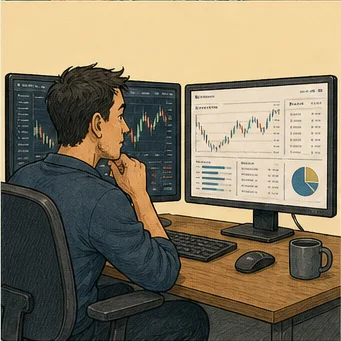

Selecting a trading challenge often feels like picking a new tool for your workspace. Many traders focus on the headline profit target or the total account size, thinking those are the only numbers that matter. However, a program is a poor fit when its internal rules constantly conflict with the way your proven strategy operates. Choosing by account size or low entry fees alone can hide the true costs of hidden restrictions, unexpected platform changes, mandatory resets, and a rigid drawdown model that leaves little room for standard market noise.
A successful partnership starts with a clear understanding of your own requirements. Compare the program details against your actual historical records and your real life schedule. The goal is to identify a workable match before you ever spend money, rather than selecting a firm simply because its marketing makes the profit targets look easy or attainable. This guide helps you filter out the noise and focus on whether a specific firm can actually accommodate your existing, tested trading methodology without forcing you to change your habits or risk profile.
This article covers one part of the decision. The main prop firm passing service guide explains how how to choose a prop firm challenge for your trading strategy connects with preparation, risk control, and the funded stage.
Write Down Your Trading Method
Before you look at any external program, you must define your own requirements. Describe the market, specific instruments, sessions, holding periods, entry conditions, and stop logic for your typical setup. Also note the frequency of your trades and the days or hours when you can actively supervise your positions. A vague description like intraday forex is not enough to make a meaningful comparison against the complex restrictions of these programs.
Use a trading journal or backtest to identify exactly what your method requires. Does your strategy depend on holding positions overnight or during active news? Do you require automated execution or specific order types on the platform? List these non negotiable needs before you begin your firm search. Never assume every program supports your unique style of trading. Avoid the common trap of trying to force your strategy into a restrictive box. Being honest about your requirements saves time and reduces future frustration.
Document your specific trading method
Consider a trader who uses a breakout strategy during news volatility. If they fail to document this, they might choose a prohibited firm. Many firms ban news trading during the first 5 minutes of a release. The trader would then face a constant conflict with firm rules. Writing these requirements down first helps the trader save money. You avoid firms that would inevitably lead to a rule violation.
Consider your personal risk management needs during the selection process. Does your strategy require fixed stop losses or rely on mental stops? Does the method involve scaling into positions or adding to winning trades? Document every specific part of your process for easy comparison. Cross-reference these steps against the fine print for each potential firm. Create an objective baseline that focuses on technical requirements instead of website aesthetics. This approach ensures your choice meets the functional needs of your specific trading work.
Compare Drawdown With Your Tested Risk
Drawdown models represent the most misunderstood part of any evaluation process. Study exactly how daily and maximum loss limits function for each firm. Check if calculations use balance or equity for every trade result. Verify how the firm counts floating profit, loss, and trading commissions. Confirm the specific time when the daily reset occurs for your account. Some firms use trailing drawdowns that follow your peak balance closely. Others use static limits that remain fixed regardless of your account growth. Two programs with identical percentage limits often provide vastly different levels of usable room.
Apply these specific rules to your historical losing sequences and risk assumptions. If your strategy has a 5% drawdown during normal periods, a 6% firm limit is dangerous. You have almost no margin for error in that scenario. Perhaps your method only fits by shrinking stops or increasing trade frequency. These changes usually indicate that the program does not suit your specific strategy. Stick to what your tests prove to be effective and reliable.
Compare drawdown with tested risk
Consider a case where your strategy has a 4% historical drawdown. You evaluate a firm that uses a trailing drawdown model now. If you make a profit early, that trailing stop might lock in. It often stays there even if you take a later loss. If you do not understand this, you might hit a violation after a good week. You fail even if you stayed within your overall risk limits for the period.
Always test your strategy against the most restrictive version of firm rules. If you change your position sizing to stay within limits, you trade a different strategy. This shift is a common cause of failure for many traders. It is much better to find a firm with compatible drawdown rules. Do not attempt to adapt your style to fit an arbitrary mathematical limit. Stay true to the strategy that you have already fully tested.
Check Trading and Holding Restrictions
Compare policies regarding news trading, holding positions, and minimum trading days. Check rules for consistency, copy trading, and expert advisor usage as well. Verify these requirements for the specific account stage you plan to use. Rules often change between the evaluation phase and the funded phase. A small rule can have a massive impact on your ability to execute. Examine every detail carefully before you commit your time and money.
Do not treat platform execution as proof of permitted activity. Platform software often operates independently of specific firm rules. You might place a trade that violates a hidden rule. The system will execute the trade, but the firm will flag it later. Ask the firm through official channels if a condition is ambiguous. Save the written response before you buy anything from them. This documentation serves as your only protection against future policy changes.
Check holding and trading restrictions
Imagine a trader who uses an expert advisor for automated order execution. If the firm bans all third party software, the trader fails immediately upon logging in. Another common risk involves specific consistency rules for your account. A firm might invalidate a profit if one trade provides too much of the total gain. If your strategy produces skewed results with occasional large winners, you might violate this condition unknowingly. Always check these rules before you finalize your selection and request a payout.
Keep a list of these potential restrictions as you browse different firms. Some firms are very loose with their rules but charge higher fees, while others are strict but cheaper. Your priority is to ensure the rules you identify as deal breakers for your strategy are not present. If a firm prohibits weekend holds and your strategy requires them, that firm is off your list, regardless of any other benefits they might offer. Clarity on these points is essential.
Match the Program to Your Calendar
Estimate the valid opportunities your strategy produces in an average week. Compare this volume with firm time limits and minimum day requirements. Count only the sessions you can actually monitor in real time. Do not count every weekday on the calendar. Many traders make the mistake of assuming they can trade full time. Your day job or family obligations might prevent you from catching necessary setups.
Account for work commitments, travel, public holidays, and scheduled news restrictions. If meeting a requirement would force you to trade during a session you do not normally trade, you are better off choosing a different program or waiting until your schedule aligns with your strategy. Forcing trades to meet a minimum day requirement is a common way to introduce bad habits and increase risk without any corresponding increase in the quality of your trade signals.
Match program to your calendar
Imagine you have a strategy that only works during the London open. If you have to work during that time, you might think you can just catch the New York close instead. However, if your strategy is not tested for New York, you are essentially gambling with your entry fee. A program that demands a minimum of 10 trading days might also pressure you to trade on days where your strategy produces no high probability signals, just to satisfy the clock.
If your schedule is tight, look for firms that do not have strict minimum trading day requirements. These firms allow you to wait for the right setup rather than forcing you to trade when no setup exists. This flexibility can be the difference between reaching your goal with a disciplined approach and failing because you took low quality trades to meet an arbitrary administrative requirement. Always prioritize your strategy over the firm schedule.
Test the Platform and Instruments
Check that the program offers the symbols and execution environment you used in your testing. Verify details like contract size, tick value, volume steps, leverage settings, order types, margin requirements, and any specific symbol suffix used on the actual platform. Even if two firms offer the same platform, the backend configuration can differ significantly. You need to ensure the environment mirrors your testing setup as closely as possible to avoid execution errors.
Rehearse your order entry, stop placement, partial exits, and alerts using the exact platform provided. A familiar brand does not guarantee identical specifications or permissions across different firms. Many firms offer a free trial or a demo account on their platform. Use this time to export your trade history to ensure the output format works with your analysis tools. Small discrepancies in data can lead to large mistakes in your performance accounting during the live evaluation.
Test platform and instrument data
Consider a hypothetical situation where you test your strategy on a platform with 0.1 pip spreads. If the firm platform has 1.0 pip spreads, your strategy will underperform your backtests significantly. Those small costs add up over hundreds of trades. If you rely on specific order types like OCO orders or trailing stops, make sure the firm platform supports them natively. Relying on platform specific features can lock you into a workflow that is hard to port elsewhere later.
Do not underestimate the importance of symbol naming conventions. Some firms use specific prefixes or suffixes to distinguish their data feeds. If your charting software or your trading scripts are not configured to recognize these, you could be looking at the wrong data or missing your entry signals entirely. Test your entire workflow, from the moment you open the chart to the moment you close the position, using the actual platform provided by the firm.

Related guide for How to Choose a Prop Firm Challenge for Your Trading Strategy: A useful companion for this decision is FTMO vs Other Prop Firm Challenges: How to Compare Programs Fairly. There is no universally best challenge. Compare programs by the rules that fit your strategy, then choose support that understands the specific account rather than using a generic plan.
Calculate the Full Cost You Can Afford
Compare the initial evaluation fee with the cost of possible resets, platform charges, data fees, service costs, and the estimated time needed to complete the process. Read the refund conditions carefully and understand exactly what happens after an unsuccessful attempt. Do not count a hoped for future payout as money already earned. Base your budget on the assumption that you will have to pay for the service multiple times before reaching your goals, as learning takes time.
Use only money you can afford to lose without affecting your rent, debt payments, emergency savings, or essential personal expenses. A lower fee is not good value if the rules are incompatible with your strategy or if the reset structure encourages you to keep spending money on repeated failed attempts. If you cannot afford to lose the fee, you will likely trade with fear rather than following your strategy, which leads to poor decision making.
Calculate real affordable costs
Look at a hypothetical budget. If you have $500 to invest, and a firm charges $100 for an evaluation, you have 5 chances. If the rules are a bad fit, you might burn through those $500 in a few weeks. If you instead spent time finding a firm that fit your strategy for $150, you might have a much higher probability of success. The value is found in the compatibility, not just in the upfront price tag.
Consider the hidden costs of time. If a firm requires a very long period to pass, you are effectively paying with your opportunity cost. Could you have spent that time working on other aspects of your trading or your career? Calculate the cost of the evaluation as a total of both money and time. If the program demands too much of both, it might not be a viable choice for your situation, regardless of the advertised payouts.
Use a Simple Fit Matrix
Create a table where you score each candidate firm on hard compatibility factors. Include the drawdown method, permitted instruments, holding rules, schedule, platform, and any automation needs. A failure on a critical requirement should immediately remove the firm from consideration. Do not fall into the trap of letting a lower price or a higher advertised profit target convince you to overlook a fundamental incompatibility with your trading method.
Once you have filtered the list based on hard requirements, compare the softer factors. These include support responsiveness, the clarity of the client dashboard, the ease of the payout administration, and the quality of their educational documentation. Keeping the reasons for your choices in a simple file allows you to revisit the logic later if the firm changes its terms or if your own strategy evolves over time.
Use a simple fit matrix
To build your matrix, list your 5 most important requirements in the left column. For each firm you are considering, assign a checkmark or a cross for each requirement. If a firm gets a single cross on a deal breaker, strike them off your list. This objective method prevents emotional bias from influencing your decision. It helps you see clearly which firms actually respect your method rather than just marketing to your desire for a large account balance.
A comparison matrix helps you evaluate different firms fairly. One firm might offer great support but feature a difficult trailing drawdown. Another firm might have a simple static drawdown but poor customer support. Use a matrix to weigh these factors against each other effectively. Perhaps you decide the static limit justifies the risk of poor support. Maybe you prefer the higher quality service despite the tougher drawdown rules. This method ensures your final decision rests on facts rather than your first impression.
Recognize When No Program Fits
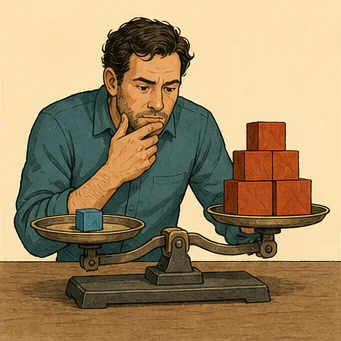
Walk away or delay your purchase when the only path to a target requires changing your tested method, trading outside your available hours, ignoring an unclear rule, or risking money you cannot afford to lose. Choosing not to purchase is a valid and often intelligent decision. There is no requirement to have an active evaluation at all times. In fact, most traders benefit from periods of quiet work where they focus on their edge rather than a firm deadline.
Revisit your comparison after you have accumulated more trading data, developed a more flexible schedule, or found a firm with clearer terms. A challenge should fit a process you already understand and have mastered; the process should not be rebuilt from the ground up just to accommodate the constraints of an advertised account. If you find yourself constantly adjusting your risk or your logic, you have moved away from trading and into guessing.
Identify when programs do not fit
You may spend weeks evaluating options only to find conflicts with your strategy. Do not force a fit if every firm clashes with your plan. Take this as a signal that your strategy needs refinement. Alternatively, focus on trading your own capital until you reach a larger size. Pushing against a wall is a waste of your valuable energy. Remember that the markets will remain available tomorrow, next month, and next year.
Sometimes the best trade is the one you do not take. Apply this same logic when you select a trading firm. Being patient protects your capital and your mental clarity. You avoid the cycle of repeated failures by skipping incompatible programs. Many traders fail because they choose firms that reject their strategy immediately. Trust your own analysis and stick to your documented needs. Sign up only when the conditions are truly in your favor.
Building a Sustainable Routine
A sustainable routine is the foundation of any successful trader. Once you have chosen a program, your focus must shift from searching to executing. Review your rules every single day before you open your platform. If your plan is to trade for 2 hours, stick to those 2 hours. Do not extend your time because you are down and feel the need to chase a recovery. Consistency is what keeps your drawdown within the acceptable limits of your plan.
Keep a detailed log of every trade you take during your evaluation. Note not just the result, but why you took the trade and whether it complied with both your own strategy and the firm rules. If you find yourself close to a limit, take a break. Stepping away from the screen when you feel emotional pressure is a skill that will serve you well in any trading environment, whether you are in an evaluation or trading your own capital.
Build a sustainable professional routine
Remember that the evaluation is a simulation, but the habits you form during it are very real. If you practice sloppy risk management or ignore your rules now, you will carry those same habits forward. View this time as a professional training period where you are proving your competence to yourself. If you can stay disciplined when the pressure is high, you will be much better prepared for the challenges of managing larger sums of money later.
Finally, ensure that you always have access to your original trade journal and your plan. If you feel lost, return to those documents. They are your anchor. They tell you exactly who you are as a trader and what you need to do to succeed. Do not let the distraction of an evaluation platform lead you away from the methods that have worked for you in the past. Stay focused on your edge and stay patient.
Related guide for How to Choose a Prop Firm Challenge for Your Trading Strategy: For the next practical part of your preparation, continue with The Prop Firm Challenge Trading Plan: A Day-by-Day Framework. A written daily routine makes it easier to follow challenge rules when the market and your emotions become noisy. Use this framework as a starting point.
Scaling Your Results Carefully
Many traders want to scale their results by adding more accounts or moving to larger capital firms. This is a common goal, but it must be done with extreme caution. Scaling works when your strategy is stable and your risk is controlled. If you are struggling with a single account, adding more will only multiply your problems. Master one account and one strategy before you consider taking on more complexity or more capital.
When you are ready to scale, consider the impact on your mental load. Managing multiple accounts with different drawdown rules can be confusing. If you decide to go this route, ensure that your systems are robust enough to handle the increased operational complexity. Use clear labeling for your accounts so you do not mix up your strategies or your risk limits. Confusion leads to errors, and errors lead to failures in this line of work.
Scale your results carefully
Look at your performance over a long horizon, such as 6 to 12 months. Does your edge hold up under different market conditions? If your strategy only works in a bull market, you are not ready to scale. A scalable strategy is one that produces consistent results across varied market environments. If your current method shows this, then and only then should you think about expanding your footprint in the industry.
Above all, remain humble. The market has a way of testing even the best strategies. If you reach a level of success, do not get complacent. Continue to treat every trade with the same care and attention to detail that got you to that point. The moment you start thinking you have beaten the market is usually the moment the market will teach you a harsh lesson. Keep your plan simple, your risk low, and your mind focused.
Reviewing Performance Regularly
Set aside time at the end of each week to review your performance. Look at your drawdown levels, your win rate, and your risk to reward ratios. Are you trending toward the firm limits? If so, why? Is it because of market conditions, or is your execution slipping? Being proactive with your review allows you to catch small problems before they turn into major violations that end your participation in the program.
Keep a spreadsheet of your performance metrics. Track how close you get to your daily loss limit and your maximum drawdown. If you notice a pattern of coming close to the limit frequently, it might be a sign that your position sizing is too aggressive for the rules of the firm. Adjusting your size down is not a sign of weakness. It is a sign of a professional who knows how to survive long enough to win.
Review your performance regularly
Consider your psychological state as well. Did you feel stressed during your trading week? If you did, identify what caused it. Was it a specific trade, or was it the pressure of the evaluation itself? Understanding your emotional triggers is a massive part of becoming a consistent trader. The better you understand yourself, the more effectively you can manage your reactions to market swings.
Share your findings with no one, as this is a private process, but be brutally honest with yourself. If you are failing, own it. Figure out the root cause and address it. If you are succeeding, identify what you did well and aim to repeat that process. Continuous improvement is the only way to stay in the game. Do not let successes go to your head, and do not let failures discourage your long term goals.

Maintaining a Long Term View
Trading is a marathon, not a sprint. The evaluation phase is just one small part of your career. Whether you pass or fail, the experience should make you a better, more prepared trader. If you fail, take the lessons, refine your plan, and try again only when you are truly ready. If you pass, stay grounded and keep following the rules that got you there. The goal is long term sustainability, not a short term win.
Avoid the hype and constant chatter about earning quick profits. This noise is designed to distract you from your own process. You are the only person who knows your strategy needs and budget. Do not let the success stories of others dictate your personal pace. Your path is your own and requires a unique approach. Build your career on the reality of your data rather than social media trends.
Maintain a long term perspective
Keep your equipment, your journal, and your analysis tools updated. Stay informed about changes in market structure and how they might affect your setups. The market is always changing, and your strategy must be flexible enough to adapt without losing its core logic. Being a trader is a lifelong pursuit of knowledge and improvement. Enjoy the process of learning and growing, and do not lose sight of why you started in the first place.
Success is not defined by a single payout at the end. It is defined by your ability to show up consistently. Do the work and follow your plan every single day. Manage your risk with discipline to achieve long term results. If you maintain this focus, the rewards will eventually follow. Focus only on the inputs you can control and manage. Market outcomes will take care of themselves for a professional trader.
Final Takeaway
Choose a challenge by matching current rules, drawdown mechanics, schedule, platform, and total cost to a tested trading process. Record the comparison and use official terms for every material decision.
If the fit depends on forced trades, unfamiliar risk, or an unresolved rule, wait or choose another program. The goal is to find a system that supports your existing work, not to mold your strategy into a shape that risks your capital. Be patient, stay objective, and rely on your own documented data to guide every decision you make about these programs.