
No trader can guarantee a payout decision, and no article can replace the firm's current agreement. What a trader can do is reduce preventable problems by reading funded conditions, following permitted methods, maintaining accurate records, and using verified support channels. This approach helps clear the path for professional interaction with the platform.
Payout readiness begins well before a request. A clean process makes it easier to reconcile activity, identity details, eligibility dates, and account rules without resorting to last-minute changes in trading behavior. By focusing on consistency rather than the payout itself, you keep your risk management intact and your administrative profile orderly for the evaluation process.
If you are comparing independent preparation with structured support, the main prop firm passing service guide places how to avoid a prop firm payout denial inside the complete evaluation process.
Read Funded Terms as a New Agreement
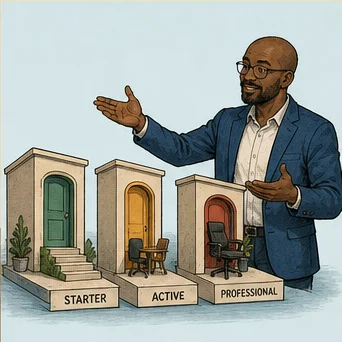
Moving from a test account to a real account is a big step. Many traders wrongly think the rules stay the same after passing. This is a common mistake. You must compare your new status with the terms for the funded program.
Drawdown limits can change. How they are calculated might differ too. Payout dates often rely on specific days or cycles unlike the test. Look at rules for news trading or holding positions. Passing a test does not mean all rules remain the same.
If you see confusing language, write it down. Save a dated copy of your current agreement. Ask clear questions in writing about any uncertainty before you trade. Use the official account area and help desk rather than posts from others.
Think of this as a real business contract. Do not guess what words mean. The firm does not overlook small rule changes. They manage risk through these rules. Your job is to make sure your trading matches the signed agreement.
Follow Permitted Trading Methods
The firm reviews how you trade during a payout check. Only use tools and methods the program allows. A method might cause problems even if it makes money. Just because a bot can run a trade does not mean it is allowed.
Think about this example. You might use a script to manage your trade sizes. If the firm bans such tools, using the script breaks your deal. This is true even if the script made money or protected your account balance.
Check with the firm before using any outside tool or service. Keep full control of your account at all times. Do not share your login with outside groups. Even if a service claims they are allowed, check with the firm first. This prevents accidental rule breaking.
Do not try to hide how you trade. If you feel you must hide your methods, that is a bad sign. Being open is your best way to stay safe. If your trading method feels risky, choose a safer path instead.
Protect the Account Before Requesting
Do not make big trades or fast changes when you want a payout. Keep using your regular risk plan to earn your money. Being steady is very important. Changing to fast trades just to hit a goal brings too much risk.
Check your current drawdown and profit rules before you open new trades. Some plans limit how much profit can come from one trade. If one big win goes over the limit, your payout might be denied. Meeting a goal is not a reason to break your plan.
Think about this case. You have 5,000 in profit. The firm says no more than 30% of profit can come from one trade. If a trade makes 2,000, that is 40%. This breaks the rule. Track your numbers in real time to avoid surprises.
Check your balance every single day. Do not assume your dashboard shows the exact amount you can take out. Think about fees and rules. Keep your risk per trade steady no matter how close you are to the payout date.

Maintain Complete Trading Records
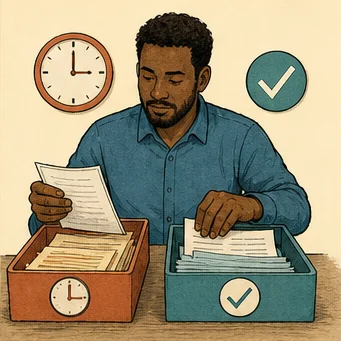
Save your statements, trade history, and dashboard images. These files explain your dates and costs if you need to check your math. If the firm finds a problem, your own records help you answer quickly.
Write down facts fast. Log your trade plan, risk, and costs every day. Do not change your notes later to make things look better. Real notes made at the time are more trusted. They show you watched your performance with care.
Use a simple list or log. Add columns for the date, what you traded, size, and prices. Note if the trade followed all rules. Add a column to track your daily drawdown. This habit helps you focus on the data the firm checks.
When you keep good notes, you can find patterns that might cause issues. If you see you trade during news events often, you can stop now. Keeping good records helps you spot your own mistakes before the firm does.
Prepare Verification Carefully
Follow the formal firm steps to share your tax, payment, and identity data. Verify that your name, home address, and all legal documents are current. Ensure they match the specific formats the firm requires before the payout window opens. Do not wait until the final moment to perform these important tasks. Submitting information that is rushed or incomplete leads to delays and creates doubts about your administrative standards.
Check that your bank details show the exact same name as your firm account. If the firm asks for a certain type of photo identification, make sure your copy is readable and has not expired. If you have moved recently, update your address in the portal before you ask for funds. This prevents a mismatch when the firm reviews your details for your payment.
Keep your personal data safe. Never send your private documents, security codes, or bank details to an social account or email that you have not confirmed. Check any strange request for your data through official channels only. If you get an email that asks for your password, be very careful. Visit the main website to contact official support if you have any doubts.
Your financial identity is very sensitive information. You lower the risk of fraud and theft by keeping it secure within the platform. This preparation proves you are a serious participant. It shows you understand the formal rules of your financial relationship with the firm.
Submit a Clear Request
Find the final amount by using the profit, split, minimum limit, and timing rules. A high account balance does not always equal the total amount you can withdraw. Conditions like reserves might change the final number. Subtract all fees or mandatory balances from the total profit to get the actual payout figure.
Keep a record of your confirmation. Do not change how you trade while you wait for a reply. If the status is not clear, ask official support by using your account and request reference. Do not send several different requests. One clear request is much easier for a person to check than many confusing messages sent from different places.
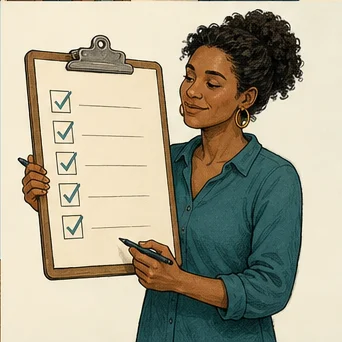
Follow these steps when you want to request your payout:
Confirm your total eligible amount and the correct date.
Check your payment method to ensure all details are current.
Save the final confirmation notice that the system gives you.
Use one single support reference to talk with the team.
Your goal is to keep things simple. When you send a request, it must be plain that you followed every rule and calculated your profit based on your contract.

Related guide for How to Avoid a Prop Firm Payout Denial: A useful companion for this decision is Prop Firm Payout Readiness: What to Do After You Pass. Build your funded-stage plan before the evaluation ends. This guide covers payout conditions, account protection, documentation, and sustainable risk.
Respond to Questions With Evidence
If the firm asks you for data, answer it accurately. Use the verified channel they request. Refer to account statements, logs, and dated rules rather than vague claims about what you planned to do. The firm uses hard data, and you should use it too. If they ask about a specific trade, give them the trade ID, the timestamp, and the exact rule you followed.
A question from the firm is not proof of a bad outcome. Keep your answers factual and save all your messages. Avoid advice that tells you to hide your devices, your identity, your trading style, or your account connections. If you are asked about your strategy, keep your answer professional. Focus only on your mechanical process. Do not get emotional or defensive because feelings do not change the objective rules.
If you do not have an answer right away, tell the firm you need time to check your records. Never make up a reason or try to deceive them. If you made a mistake, admit it if that is true. Honesty is usually better than trying to cover up a mistake. Trying to hide the truth often leads the firm to close the account.
Reconcile the Request Before You Submit
Compare the amount you want to request with the firm's eligible balance. Include the stated profit split, any minimum limit, and the date the window opens. Keep your math next to your account statement. This way, every number has a clear source. This step ensures you do not try to withdraw more than you are allowed.
Think of a case where your balance is 10,000. Your total profit is 2,000 after taking out a starting buffer. If the split is 80%, you are requesting 1,600. If you try to request 8,000, the system will mark this as an error. By doing the math yourself before you start, you save time. You also stop your request from being rejected for a simple math mistake.
Check that your chosen payout method and account details match the current firm instructions. This is an admin cross-check. It does not predict how fast a person will decide on your request. This step ensures that once the firm approves the payment, the money goes to the right place without any bank errors or routing failures.
Build a Recurring Payout Review
Plan a check before every request to look at rule changes [L6]. Review your account eligibility and concentration limits [L6]. Check all your documentation and confirm payment details [L6]. A routine check catches mistakes early while you have time [L6]. Do this a few days before your planned payout date [L6]. This keeps you from rushing on the day you ask [L6].
View funded trading as risky after a successful payout request [L7]. Getting paid is not proof that you should take more risk [L7]. Do not use a new strategy or stop keeping good records [L7]. Keep your daily routine very steady and very focused [L7]. Every new cycle needs the same care for rules [L7]. Think of the payout as a goal you met [L7]. It does not mean you can stop following the rules [L7].
Every cycle is a chance to make your work better [L8]. If a request was slow because of missing papers [L8], fix that for the next start date [L8]. Keep your records in good order at all times [L8]. This makes your future requests fast and very easy to predict [L8].

Scaling Your Operational Workflow
Managing many accounts needs more than just good trade ideas [L15]. Use a clear system to treat each account like a firm [L15]. You have more work to do when you watch several accounts [L15]. You must track rules and data for each one separately [L15]. Mixing up your different accounts often leads to denied payouts [L15].
Think about having 3 separate accounts for your trades [L16]. Your goal is 2% growth on each in one week [L16]. You might trade the wrong size on a small account [L16]. This can trigger a rule break or a large loss [L16]. This mistake happens when you do not check your trades carefully [L16].
Set up your screen to separate your charts and logs [L17]. Use colors to mark different account types if you trade both [L17]. Build real and digital walls for every account you hold [L17]. This keeps you from making mistakes with your trade entries [L17]. Using this method shows you are a very professional trader [L17].
Write down the specific limits for each account you manage [L18]. Use this list to check your work before you start [L18]. Do not rely only on your memory during busy times [L18]. Memory often fails when the market moves very fast [L18]. Keeping your list central makes sure you follow all the rules [L18].
Ensuring Technical Integrity of Execution
The digital signals from your gear must be very steady [L25]. Delays or sync issues can lead to bad trade prices [L25]. These errors might look like you broke the rules [L25]. Keeping your connection safe is a big part of your job [L25].
Imagine your home internet stops working for a short time [L26]. Your computer might say a trade is closed now [L26]. The firm server might still show it is open [L26]. You might open a new trade based on wrong data [L26]. This can make you go over your total size limit [L26]. This is a common tech issue that leads to reviews [L26].
Check your trade status on the firm website or app [L27]. Do not just trust what your trading screen says [L27]. If a trade does not work, wait for a status update [L27]. Clicking too many times during slow internet causes problems [L27]. It creates double orders or costs you extra money [L27].
Keep a backup computer or mobile device for emergencies [L28]. Use it to close trades if your main setup fails [L28]. Being prepared shows that you are a serious trader [L28]. It helps you follow the rules even when gear breaks [L28].
Maintaining Baseline Trading Behavior
Your trading record is data the firm uses to study you [L35]. Big changes in your style can lead to manual checks [L35]. A steady style is easier to verify than one that jumps [L35]. Your goal is to show a predictable path to money [L35]. You must stay inside the risk limits of the firm [L35].
Say you make $500 a day using 5 trades [L36]. You suddenly do 20 trades in one day to get paid [L36]. Even if you do not lose money, this is weird [L36]. You will look like a strange case in the data [L36]. The firm will look at why you changed so much [L36].
Track stats like trade count and time in a trade [L37]. Look at your data over a 30-day window [L37]. If you see your activity grow, fix your trade size [L37]. Do not let the payout change how you trade [L37]. Your strategy should stay the same regardless of your balance [L37].
Keep a note of your reasons for any weird trades [L38]. If a market event made you change, write it down [L38]. Having a reason ready helps you explain your actions [L38]. This helps build trust with the risk management team [L38].
Related guide for How to Avoid a Prop Firm Payout Denial: For the next practical part of your preparation, continue with First Payout Plan for a Prop Firm Account. Treat funding as a new account: map the terms, protect the buffer, keep reconciled records, and calculate a payout request from eligible profit.
Handling Unexpected Financial Regulations
Trading around the world involves changing rules for taxes and where you live. You must make sure your actions follow firm rules and local tax laws. Tell the firm about any changes in where you live or your tax status. Do this before you ask for a payout. This helps prevent mistakes in your tax papers.
Think about moving to a new country during your funding period. The tax laws and reporting steps for your new home might be different. If you forget to update your files, you might use the wrong tax forms. The firm could then stop your payment to run a tax audit. This causes long waits and could lead to fines.
Check your tax home status every 6 months. If your status changes, tell the firm right away through their support portal. Send in all asked documents quickly so your file stays current. Keeping your tax info up to date is a smart step. It stops sudden blocks when you ask for your money.
Talk to a pro if you are not sure how to report your payouts. The firm gives you records of your trades but cannot give tax advice. Getting help from a pro makes sure your filings are correct. This shows you are a serious person who follows the rules of the firm.
Mitigating Data Discrepancies During Review
Your private logs and the firm system logs might look slightly different. This happens due to timing shifts or different data feed sources. These small gaps often cause issues during a payout check if not caught early. The firm always uses its own server logs to check your compliance. You must match your records to theirs to stop any warning flags.
Think of a time your screen shows a trade at 100.05. The firm server might show 100.06 because of a small delay in data. If your risk math needs that exact 100.05 price, your math will be off. Always use the statement from the firm as your main source for profit totals.
If you see a steady gap between your data and the platform, ask support for help. Do this before you try to take out any money. Ask how they fix fill price gaps in their own math. Getting a clear answer stops you from asking for too much money. Asking for too much often leads to an automatic rejection.
Make a folder to check your work for every trading week. Save the export of your account history from the portal along with your logs. If a gap appears, you have a side by side view to show what happened. This level of order stops small data errors from looking like you tried to fake your numbers.
Do not argue about tiny price shifts unless they hurt your rule compliance. Small gaps are normal for electronic trading. Accepting the firm data as the final word on your profit lets you move fast. Spending time fighting over fractions of a dollar is a poor use of your work time.
Navigating Payout Hold Scenarios
A payout hold does not always mean your review failed. It is often a standard step to verify your account and check rules. It also confirms your tax papers are in order. When you see a hold, stay calm and wait for news from the firm. Do not send many messages to their support team.
Think of a case where your account is on a 5 day hold. The firm is just checking your last 10 trades as a normal step. If you panic and send many emails, your case might go to a higher level. That higher level takes more time for a manual review. Treat the wait as a normal part of the work.
Check your email and the portal every day for info requests. If the firm asks about a specific trade, give clear and short facts. Explain your strategy for the entry without acting defensive. If you used a set system, share the steps you took to reach that trade.
Use the hold time to check all your other account work. If the review finds a small error in how you do things, use that to fix your flow. Often, a hold is a chance to learn about a missing paper or a rule you did not know. You can fix these things right away.
If the hold lasts longer than the time promised in your deal, send one professional note. Use your ticket number and the first date of your request. Do not guess why the hold is there. Just ask for a new date for when you will get the final answer.

Building Operational System Redundancy
Your trading setup uses many layers of tech from your internet to the platform links. A single point of failure can lead to an accidental rule break. An open trade might stay active during news because your connection dropped. Build backup plans into every single step of your trading process.
Think of a time your home power fails while you are in a trade. A backup power supply gives you 30 minutes to fix the internet and close the trade. Without this, you cannot manage the risk until the power comes back on. This cheap tool stops a tech failure from killing your account.
Make a simple second plan for how to manage trades in an emergency. Know the exact steps to close all your trades from your phone if your computer breaks. Test this once a month to make sure your logins and keys work. When a problem hits, you need to act in seconds, not minutes.
Use more than one data source to keep your analysis the same. If your main broker feed stops working, have a second price source ready to look at. This stops you from making trades based on old or wrong charts. Good data is the base for every decision you make that follows the rules.
Physical copies for your documents are also very important. Keep digital copies of your trade history on a safe drive. Make sure this drive is not connected to your main trading computer. If your main computer crashes, you can still get the proof for a payout audit from your second device.
The Psychology of Administrative Patience
The desire to take money out can create a false sense of pressure. This feeling often clouds your judgment during your daily trading work. You might start seeing your profit as a prize you have already won. You should instead view it as money inside an active account with rules. This wrong mindset often leads to poor records and risky choices. This is especially true in the final days before your payout date.
Think of a trader who needs 500 more in profit for a payout. This person might take 5 trades that break their normal low-risk strategy. If these trades fail, they lose the payout and their whole account. A professional trader should see the payout as a result of staying consistent. It should never be the main goal of your trading session.
Try to not think too much about your specific payout date. Act as if you are still working to earn your first dollar. This way of thinking keeps your risk rules very strong and firm. You will not feel pushed to force a specific trade result. When you stop chasing the payout, your trading often gets better on its own.
Build a daily routine that tracks your process instead of dollar totals. Do not check your total profit 20 times every single day. Look instead at how well you follow your specific trading rules. If you handled your risk well and used approved methods, you earned your money. This remains true even if the final profit number changes slightly. Real success is found in your daily method rather than the money.
Accept that the firm controls how fast the payout cycle moves. You cannot control the speed of the firm's own administrative review process. You can reduce your stress by accepting this lack of personal control. This stops you from acting in an impulsive or very risky way. Put your energy into the only things that you truly control now. Focus only on your next trade and keeping your own records clear.
Final Takeaway
The best prevention is transparent, permitted activity supported by current terms and accurate records. It cannot promise a decision, but it reduces avoidable confusion and makes factual review easier.
Prepare eligibility and verification details early, then keep trading decisions tied to risk and process rather than the urgency of a payout date. By focusing on your daily discipline and administrative clarity, you position yourself as a professional participant who understands the requirements of the firm and the nature of the funded trading environment. Maintain records, follow the rules, and treat each payout request as a purely administrative task.