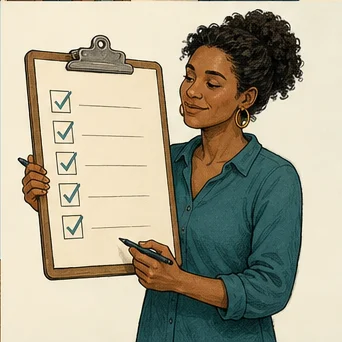

A prop firm challenge acts as a controlled environment where a trader attempts to demonstrate a specific skill set under pre-defined constraints. Think of this as a structured test that mimics certain professional trading conditions without requiring you to risk your own personal capital. You interact with this test through a dashboard that keeps score of your gains and losses against a set of rigid, non-negotiable rules. These systems monitor your performance constantly and provide a clear pass or fail verdict based on your ability to stay within the boundaries they set.
Most people focus too much on the nominal balance of the account, like a $50,000 or $100,000 headline figure. In reality, that number is far less important than the actual risk budget you are given to work with. Two programs may advertise the exact same $100,000 balance, yet they can lead to drastically different trading outcomes. Factors like how the firm calculates drawdown, when they reset your daily loss limit, or whether they allow you to hold positions over weekends change your operational reality. When you look at these offers, you must look past the total size and focus on how the specific rules interact with your trading style and your appetite for risk.
This article covers one part of the decision. The main prop firm passing service guide explains how what is a prop firm challenge? how evaluations, drawdown, and payouts work connects with preparation, risk control, and the funded stage.
The Basic Definition
An evaluation is designed to test your discipline and performance within a very specific set of operational boundaries. It is not designed to see if you can simply make money by guessing market direction. Instead, it tests whether you can execute a repeatable strategy while adhering to strict risk management standards. You need a method that avoids disqualification during times of normal market variance while still allowing for the growth required to hit the target.
Because the rules dictate how you trade, a successful pass does not necessarily prove what your strategy would do in a loose personal account. It proves that you met that specific firm’s operating requirements at that moment in time. You are essentially fitting your trading into a box with specific dimensions. If your personal style is messy or lacks structure, the evaluation process will likely force you to adjust or fail quickly because the firm's software does not account for personal feelings or loose stop losses.
Many traders mistakenly view these challenges as a shortcut to capital, but they are actually a gatekeeping mechanism. The firm wants to identify traders who can follow instructions and respect boundaries. If you approach a challenge with a chaotic mindset, you will likely hit a drawdown limit before you ever see a profit. The system is designed to favor traders who treat their portfolio like a business with strict internal policies. Every trade you place must be weighed against these rules before you ever click the buy or sell button.
Consider this a stress test for your decision making. In a standard account, you might let a losing trade run a little longer than planned if you feel the market will turn around. In an evaluation, that extra room rarely exists. The firm's software acts as a harsh regulator of your behavior. It is essentially a professional environment where the cost of being wrong is magnified by the rules. You must learn to value the process of survival just as much as the process of profit generation.
For a clearer picture, imagine a hypothetical scenario where you have a 10% drawdown limit. If you start with $100,000, that sounds like a massive buffer. However, if you ignore that limit and enter a position that drops 5% in value, you have already consumed half of your allowable loss for the entire account. A simple mistake can turn a comfortable lead into a scramble for survival. You must understand that the firm is not your friend, but a platform provider that enforces rules.
The Numbers That Matter
You need to build a single document that lists every relevant number for the program you are looking at. Include the profit objective, the daily loss buffer, the maximum overall drawdown, leverage ratios, minimum active days, time limits, and all trading costs like commissions. Once you have these on one sheet, convert them into both dollar amounts and percentages. This simple step makes your actual risk allowance visible in a way that just staring at the headline account balance never will.
For example, if you have a $1,000 daily loss allowance, that might theoretically permit ten trades with a $100 risk unit. However, a personal limit of five losses is often smarter because it leaves room for trading costs, slippage, and imperfect execution. Never use the full limit allowed by the firm as your personal target. Using the maximum capacity is a recipe for an early exit because you have no room for error or for the unpredictable nature of daily market noise.
Compare these figures to your real-world trading results. If your best streak still includes a few bad days, does the program allow you to survive those bad days without hitting the limit? Many traders skip this math, but this is exactly where most evaluations are lost. A program with a 5% total drawdown and a 2% daily limit is very different from one with a 10% total drawdown and no daily limit. Treat the stricter program as a high-precision tool and the looser one as a different beast entirely.
Use these numbers to calculate your maximum position size. If you risk 0.5% of the total account per trade, you are far less likely to breach a daily loss limit than if you risk 2% per trade. This conservative approach helps you trade longer, which gives you more opportunities to hit the profit objective. Patience is a skill you must practice here. The market will provide plenty of opportunities, so do not feel pressured to reach the target in a single day.
How Daily Loss Can Be Calculated
Daily loss limits are notoriously tricky because they can be based on either your account balance or your account equity. If the firm counts open losses against your daily limit, a single position can breach the rules even before it is officially closed. This happens if the market moves against you momentarily. Some platforms also include commissions and fees in that calculation, which means your usable room is always slightly less than the dashboard might suggest at a glance.
Always test this by placing a small, inconsequential trade during your first session. Check your dashboard immediately and compare the displayed figure with your own manual calculations. If there is even a small discrepancy, contact the support team. Never rely on your assumptions about how profit or loss is carried forward or how they handle partial closures. You want to understand exactly when you are getting close to the edge before you reach it in a real trade.
Consider a hypothetical case where the firm tracks the highest point of equity during the day. If your account grows by $500 and then drops back down, the daily loss limit might reset or adjust based on that new high point. Other firms use a fixed calculation that ignores your intra-day performance. Knowing the difference between these two methods can change how you manage your exits. You might decide to close a winner earlier than planned just to secure the daily high water mark.
Always be mindful of the daily reset time. Many firms reset their loss limits at a specific time, like the start of the daily trading session. If you are holding a trade through this transition, the way the firm calculates your daily performance might shift abruptly. This can trigger an automated disqualification if you are not careful about your position sizing during the rollover period. Keep a timer if necessary to ensure you are fully aware of when these transition moments happen.

Which Trading Styles Fit an Evaluation
You must match your trading style to the specific restrictions of the program rather than forcing your favorite method into a box where it does not belong. If you prefer swing trading, you need to check if the program allows for overnight or weekend holding. Many challenges forbid holding positions during these times, which will fundamentally break a swing strategy. If you force that strategy into a day trading framework, you will end up taking trades that simply do not have the time to work out.
News-based trading requires its own set of rules. Some firms restrict trading during high-impact events like central bank announcements or major economic releases. If your strategy relies on the volatility generated by these events, you will fail at these firms. Always check the calendar policies before you commit. Similarly, if you use automated trading, you need to ensure the firm officially approves of your software. Some firms view certain types of automated activity as high-risk and will close accounts that use them without permission.
Choosing your method should happen after reading the rule book, not before. This sounds like basic advice, but many traders sign up and only then realize their strategy violates the terms. For instance, if your edge relies on scaling into a position over several hours but the firm has a maximum position size that is too small, you cannot execute your plan. Modifying the strategy on the fly rarely works because it changes the historical performance profile you are relying on for confidence.
Be very careful with scalping. Some firms have rules about how long you must hold a trade or how many trades you can place in a certain timeframe. If you are a high-frequency trader, these rules can be incredibly frustrating. Check if the firm counts every single micro-order toward your activity limits. If the execution is slow or the slippage is significant, your scalping edge might evaporate before you make a single dollar of profit. Test the execution speed early on.
What Happens After the Target
Reaching the profit objective is only the first step in a longer process. Once you pass, you may be required to move through a second phase or complete an extensive set of identity checks. Do not start planning how to spend your payouts until you have read the documents for the next stage. Often, the rules change once you are officially funded. The account you trade after the evaluation might have different drawdown requirements or different payout schedules than the test account.
Keep your administrative documents organized from day one. You will likely need proof of address, a valid government ID, and bank account information. Handling these requests while you are excited about passing a challenge is one thing, but if you do not have the documents ready, the administrative delays can feel like a lifetime. It is much easier to have everything scanned and ready in a folder on your computer before you finish the evaluation.
Understand that the transition from a test account to a funded account is often a legal and administrative hurdle. The firm needs to verify that you are who you say you are and that your account information is correct. If there is a mismatch between your trading account and your personal bank information, it can lead to long delays or even a refusal to process payments. Make sure everything is perfectly aligned before you submit your final documentation for review.
Stay disciplined even after you hit the target. It is very common for traders to get sloppy once they cross the finish line because they think they have already proven their point. In reality, that is the moment you need to be the most disciplined. If you blow up the account with reckless trading after you meet the objective, you might find that the firm is unwilling to move you to the next phase. Maintain your focus until the account is fully live.

Related guide for What Is a Prop Firm Challenge? How Evaluations, Drawdown, and Payouts Work: A useful companion for this decision is Prop Firm Passing Services for Beginners: A Plain-English Starting Guide. A beginner-friendly guide to funded evaluations, challenge preparation, risk limits, service models, and the habits that help you trade with more control.
Fees, Resets, and the Real Cost
When calculating costs, look at the entire picture, not just the initial entry fee. Think about the spreads, the commissions, the swap rates for holding overnight, and the cost of any necessary resets. If you treat the entry fee as the only cost, you are ignoring the biggest expenses of this business. Many traders lose more money on commission and slippage than they ever expected, and this turns a profitable strategy into a break-even one or worse.
If the firm offers a refundable fee, make sure you understand the exact conditions required to get that money back. Do not assume it is a simple process. Often, you need to meet a specific number of payout cycles before you qualify for a refund. Read the fine print carefully. If you are relying on that refund to pay for your next month, you are setting yourself up for failure. Budget for these costs as if you will never get them back.
Use a written budget for your trading business. Decide on the maximum number of attempts you will make and set a hard stop point for further spending. This prevents the initial low entry fee from becoming an open-ended series of emotionally driven resets. If you find yourself paying for a reset every few days, stop and re-evaluate your plan. Something is fundamentally wrong with your risk management if you are losing accounts at this high rate.
Consider the cost of failure as part of your overall investment in learning. If you treat each failure as a data point rather than a catastrophe, you will be much better off. Analyze why you failed. Was it a rule violation, or was it a bad trade? If it was a rule violation, fix your process. If it was a bad trade, revisit your strategy. Do not blame the firm or the system. Take ownership of every dollar spent and every account lost.
Where a Passing Service Fits
Coaching and risk review services can help you interpret the firm's rules and build a more disciplined trading plan. However, any service involving third-party signals or automated execution requires a careful check against the firm's current rules. Firms change their policies about copy-trading and automation quite often. What was allowed yesterday might be prohibited today. If you use a service that violates these rules, you risk losing your account and your initial fee without warning.
The best kind of support is usually one that leaves the decision-making power in your hands. If a coach helps you design a strategy that you manually execute, that is generally safe and helps you learn. If a service promises to trade for you, you are handing over your credentials and your risk control. This is a very high-risk situation. Even if the service is honest, the firm might flag the account for unusual activity patterns, which is a common reason for automatic closures.
Always keep the final say on every trade. Regardless of what model you use, you must verify the permissions directly with the firm's support desk. If you have any doubt, ask in writing and keep a record of the response. If you just guess and hope for the best, you are gambling with your capital. Responsibility for every accepted trade rests with you, and no third-party service will be held liable if they cause you to breach a rule.
Be wary of any service that guarantees a pass. There is no such thing in this industry. Markets are unpredictable, and any system can fail during times of high volatility. If a service promises a success rate, take that as a red flag. A legitimate service will focus on helping you understand the mechanics, the risk management, and the psychology of trading. They will not make impossible promises about profits or guaranteed account funding.

Beginner Checklist Before Starting
Before you ever place your first real trade, you should follow a simple routine. Calculate your exact position size based on the distance to your stop loss and the amount of money you are willing to risk on that single trade. Test the platform in a practice environment until you can open, close, and adjust trades without thinking. Save the current version of the firm’s rules in a document you can see on your second monitor while you trade. These simple steps prevent common mistakes.
Practice the entire workflow before you ever put a single dollar into a paid account. Measure your stop, calculate the volume of your position, place the order, and see if you can locate the live loss metric on the dashboard. If you have to spend time searching for where your loss is displayed during a real trade, you are already losing your edge. Operational familiarity is the only way to avoid rushed, emotional decisions when the market starts to move against you.
Maintain a daily log of every trade you make, even the small ones. Note why you took the trade, how you managed the risk, and what the final outcome was. If you do not track your own data, you will never be able to improve your performance. You will just repeat the same mistakes over and over, wondering why you never seem to pass the challenge. Treat the log as your most valuable tool, not as a boring chore.
Use a simple event calendar to stay updated on economic news. Even if you are not a news trader, knowing when major releases are coming is essential. Unexpected volatility during an economic announcement can stop you out of a perfectly good trade. If you stay on the sidelines during these times, you will save yourself a lot of frustration. Build this into your routine, and do not make exceptions just because you feel a trade looks good.
Advanced Risk Management Strategies
Successful traders in evaluations often use a tiered approach to their risk. They start with a smaller position size during the early stages of a challenge to get a feel for the market and the firm’s rules. As they build a cushion, they might slightly increase their risk, but never to the point where a single loss could threaten the entire account. This building of a safety net is essential for long-term survival in a constrained environment.
Another effective method is the trailing stop loss. Once a trade moves in your favor, move your stop to break even as quickly as possible. This removes the risk of that specific trade turning into a loss. By doing this, you keep your equity protected and you allow your winning trades to run. You do not need to hit massive home runs to pass an evaluation. You just need a steady, consistent accumulation of small wins.
Consider the impact of correlation in your portfolio. If you take three trades that all move with the same currency pair, you are not really diversifying your risk. You are just stacking your risk in one basket. If that pair moves against you, you will lose on all three positions at once. This is a common way for traders to hit their daily loss limit without realizing it. Spread your risk across uncorrelated assets to smooth out your results.
Keep your eye on the time of day. Liquidity can change dramatically throughout the 24-hour trading session. If you are trading during the thin markets of the overnight session, spreads can widen and volatility can be erratic. These conditions are rarely ideal for a disciplined strategy. Stick to the times of day when the market has the most depth and the cleanest price movement. It makes execution much easier and reduces the chances of slippage.

Related guide for What Is a Prop Firm Challenge? How Evaluations, Drawdown, and Payouts Work: For the next practical part of your preparation, continue with The Complete Guide to Pass a Prop Firm Challenge in 2026. This complete guide brings challenge research, risk, execution, psychology, and post-pass planning into one practical workflow.
Handling the Mental Pressure
Trading for a firm is mentally draining because of the constant surveillance of the rules. You might find yourself checking the dashboard every five minutes, which is a sign of stress. If you feel this way, you are likely trading too large for your own comfort level. Reduce your position size until you can go an hour without checking the account balance. The goal is to reach a state where you are following your plan, not just watching the money move.
Accept that there will be days when you do not trade at all. If the market is not giving you a high-probability setup, the best move is to walk away. Many traders feel they must trade every day to make progress, but that is a dangerous mindset. In an evaluation, your goal is to stay in the game until you reach the target. Sometimes, the best way to do that is to protect your capital by doing absolutely nothing at all.
If you lose an account, take a break. The mental fatigue after an evaluation failure is real, and it can lead to bad decision-making in your next attempt. Don’t feel like you need to jump back in immediately to recoup your costs. You will just end up losing again. Take a few days off, clear your head, and look at your past performance with a fresh perspective. You are playing a long-term game here, not a sprint.
Remember that the challenge is just an extension of your own trading skills. It is not an arbitrary game you have to beat. If you are a good trader, you will eventually pass. If you are not, no amount of tricks or hacks will help you in the long run. Focus on your process and your consistency. Everything else is secondary to the quality of your decision-making and your ability to respect the rules you have signed up for.
Reviewing Your Performance
After every trading day, set aside time to review your results. Look at your entries, your exits, and your stops. Did you follow your plan? Did you violate any rules? Be honest with yourself. This is the only way to grow as a trader. If you find a pattern of bad decisions, identify it and change it. You cannot fix what you do not acknowledge. Keeping a journal is not just about recording profit or loss.
Look for the emotional patterns in your trading. Do you notice that you tend to overtrade after a loss? Do you become overconfident after a big win? These emotional states are your biggest enemies in a constrained environment. By identifying these triggers in your journal, you can start to catch yourself before you act on them. The more self-aware you are, the more likely you are to succeed in these programs.
Use your journal to track how the firm’s rules affected your decisions. Did you have to close a trade earlier than you wanted because of a drawdown limit? Did you miss a move because you weren't allowed to trade during a news event? These are important data points that will help you decide if you should stick with that specific firm or look for one with rules that better suit your strategy. Your journal should include these environmental factors.
Share your review with a mentor or a trusted trading friend if you have one. Sometimes, an outside eye can see the flaws in your process that you are completely blind to. Don’t be afraid to ask for feedback. You are not meant to figure this out entirely on your own. A fresh perspective can save you months of frustration and, more importantly, a lot of money in failed attempts.

Maintaining a Long-Term Perspective
A prop firm challenge is not the end goal. It is a stepping stone toward a career in professional trading. If you keep this perspective, you will have more patience and discipline. You are building a track record of consistency and risk management. This experience is valuable even if you decide to eventually move to your own capital. You are learning how to operate under pressure and how to manage a professional portfolio.
Don't fall for the trap of thinking that passing an evaluation makes you a finished trader. It just means you have successfully navigated a specific test. You will continue to face new challenges and new market conditions. Never stop learning, never stop reading, and never stop refining your strategy. The market is always changing, and you must be willing to adapt if you want to remain profitable over the long term.
Surround yourself with other serious traders who share your commitment to the process. Avoid the noise and the hype that surrounds the industry. Focus on the hard work of trading. Success in this field comes from doing the basics correctly, every single day. If you stay committed to your plan and your discipline, you will eventually achieve your goals. It is a slow, steady process, not a sudden event.
Finally, remember why you started trading in the first place. Whether it was for the independence, the intellectual challenge, or the potential for growth, keep that motivation alive. Don’t let the stress of an evaluation steal your passion. If you find yourself enjoying the process, you are far more likely to succeed. Keep it professional, keep it disciplined, and keep working hard. The market rewards those who show up prepared.
Final Takeaway
A prop firm challenge is best treated as a constrained operating system. You must measure its boundaries, study its rules, and align your trading style to fit its specific requirements before you ever consider funding an attempt.
No outcome is guaranteed, but clear measurements, conservative position sizing, and a thorough understanding of the firm's primary-source rules provide a much better basis for your decisions. Focus on survival and process, as these are the true drivers of long-term success in any professional trading environment. Use these guidelines to help you evaluate if your current strategy can thrive within the specific constraints of the program you are researching.