
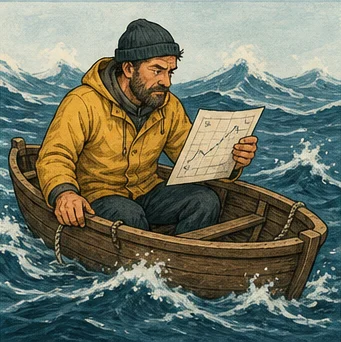
Evaluation pressure changes the meaning traders attach to a normal loss. The entry may be familiar, but the fee, countdown, and visible target can make hesitation, premature exits, or oversized recovery trades feel urgent.
Psychology becomes manageable when it is translated into observable behavior. Instead of saying confidence disappeared, record that size doubled after a loss or that an unplanned trade was opened outside the session window.
For the broader service-selection and evaluation framework, use the prop firm passing service guide alongside this focused review of prop firm trading psychology: stay clear under evaluation pressure.
Where Challenge Pressure Comes From
Fees, targets, countdowns, and a visible drawdown meter can make routine uncertainty feel personal. Identify which cue changes your behavior so it can be removed or controlled.
For some traders, hiding running P&L during execution and checking it only at scheduled times reduces target fixation. The account limits must still be monitored.
Consider a hypothetical case where a trader stares at the drawdown meter constantly. They see the number shrink and grow in real time. This creates a state of chronic vigilance. It is exhausting. The brain eventually seeks a release.
This release often comes as a poorly timed trade. The trader forces a position just to stop the stress. They want to see the number go up again. This happens even if the market has no clear setup. You must isolate these visual triggers.
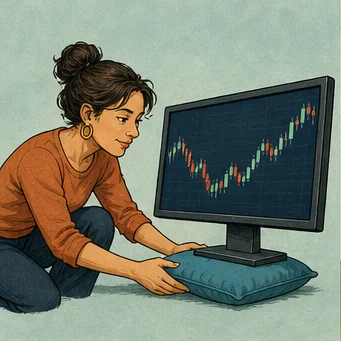
Place a piece of tape over the P&L display if necessary. Focus on your entry signal and your exit plan. The goal is to separate your trading actions from the account dashboard. The dashboard represents the outcome of your process, not the process itself.
The Profit Target Trap
A profit target becomes harmful when it changes setup quality standards. Markets do not owe the account a trade simply because the remaining number looks small.
Track process targets instead: wait for defined conditions, use fixed risk, and stop at the session limit. Profit can be evaluated later without directing the next click.
Imagine a trader who needs $500 to reach their evaluation goal. They have $480 in their account. The market is quiet. No valid patterns emerge. The trader feels tempted to force a scalp trade.
They take a low-quality entry just to clear that $20 gap. The market moves against them quickly. Suddenly, the loss is $100. Now the target is even further away. The trade was never about the market. It was about an arbitrary number.
This is a classic failure case. The target becomes a master instead of a goal. You should focus entirely on your entry criteria. If the market does not provide a signal that meets your rules, you sit on your hands. No trade is better than a bad trade taken to meet a deadline.
The Response to a Loss
The first response to a loss should be verification, not a new order. Confirm fill, stop, remaining risk, rule status, and whether the next setup independently qualifies.
Use a written cooling-off rule after any loss or rule error. It creates distance between disappointment and the decision to trade again.
Many traders struggle with the reflex to fix the damage immediately. A loss triggers a physical surge of adrenaline. Your heart rate increases. You might feel a need to get your money back. This is where revenge trading begins.
Instead of jumping into the next market move, stand up. Walk away from the screen for at least 5 minutes. During this break, write down the reason for the loss in a notebook. Was it a rule violation? Was it market noise? Was it simply a trade that did not work?
If you cannot write a coherent reason, you are not ready to trade. Wait until the emotional intensity drops. The market will offer another opportunity later. Your task is to stay within your risk limits until that opportunity arrives. You are protecting your capital for the next high-probability setup.

Confidence Without Overconfidence
Useful confidence comes from evidence that you can follow a process, including through losses. A short winning streak does not justify increasing size or relaxing a filter.
Score execution separately from P&L. This lets confidence grow from repeated correct decisions rather than from a result that may include favorable variance.
Consider a hypothetical situation where a trader wins 3 trades in a row. They feel great. They decide to skip their usual check for trend direction. They jump into the next trade because they feel lucky. The market is actually in a range, and they lose the profit they just made.
This is a common path to failure. Success in the market is not about luck or feelings. It is about consistency. You must treat every trade as a new event. Do not let your past results influence your current analysis.
Score your trades based on whether you followed your rules. Did you take the trade exactly when your setup appeared? Did you use the correct stop loss? If you did both, you had a successful trade, regardless of the outcome. This approach builds true, sustainable confidence.
Protect Attention and Energy
Attention is a finite risk resource. Late-night chart watching, constant alerts, and multitasking make it harder to notice size, event time, or a pending order.
Create a narrow trading routine with breaks and an end point. If sleep, illness, or disruption makes that routine impossible, reduce exposure or take the day off.
Your brain needs clear windows of high focus. When you sit at the computer for 8 hours, your decision quality declines steadily. You start missing details. You might forget to adjust your stop loss. You might take a trade right before a high-impact news announcement.
Limit your active trading time to when your energy is highest. For many, this is the first 2 or 3 hours of the session. Beyond that, the risk of making an error increases significantly.
If you are feeling tired, do not push through. Taking a day off is a professional move. It prevents costly mistakes caused by fatigue. Treat your mental energy as a budget. Spend it only on your best, highest-probability trading opportunities.
The Psychological Reset Routine
A reset routine interrupts the physical urgency that follows a loss or missed trade. Close the order panel, stand up, and write what happened before reopening the chart.
The routine should end with a binary decision: resume only if a new qualified setup and risk capacity exist, otherwise finish the session.
This reset must be mechanical. Do not rely on willpower. Your willpower is likely depleted when you have just taken a loss. Instead, use a physical action. Close the platform. Step away from your chair. Drink a glass of water.
Use this time to review your trade log. Did you act according to your plan? If the answer is no, you must accept the loss and stop for the day. Trying to force a win when you are off-script is a major reason for account failure.
If the answer is yes, you can decide to look for the next setup. This check ensures that you are only ever trading for the right reasons. You are building a system, not playing a game of chance.
Related guide for Prop Firm Trading Psychology: Stay Clear Under Evaluation Pressure: A useful companion for this decision is How to Use a Trading Journal to Pass a Prop Firm Challenge. A journal turns scattered trades into evidence. Use it to find the behaviors that improve consistency, protect drawdown, and make support more useful.
Accountability and Passing Support
Accountability works when another person can ask for the plan, risk calculation, and journal without shaming the trader. It should make exceptions visible before they become losses.
Agree that either party can call a pause when rules are unclear or behavior drifts. Accountability is not permission for someone else to pressure an unauthorized trade.
Having an accountability partner is helpful, but only if they understand the rules. Do not ask someone for support if they will just tell you to keep going when things get tough. You need someone who is willing to tell you when you are breaking your own plan.
Share your journal with them once a week. Let them look for patterns of rule breaking. If they notice that you often size up after a loss, they can point it out. This objective perspective is invaluable.
Remember that you are still the one making the trades. Never trade simply to impress someone else. Accountability is for the sake of your process and your long-term success. It is about keeping you honest with your own strategy.
Psychology After the Pass
After a pass, fear of losing access can create premature exits or avoidance of valid risk. The funded stage needs its own daily routine, payout rules, and smaller emotional expectations.
Do not assume evaluation sizing transfers unchanged. Review new drawdown, consistency, and payout conditions, then begin with a conservative sample.
The transition to a funded account is often more difficult than the evaluation itself. You suddenly feel like you have something real to lose. This creates a fear of failure that can paralyze your decision making.
Start your new phase slowly. Do not use your maximum size right away. Take a few weeks to get used to the new account environment. Focus on maintaining the same discipline you used during your evaluation period.
Your goal is to trade the account, not the money. If you get distracted by the potential payout, you will lose your edge. Keep your focus on the market and your rules. That is the only way to manage the new pressures of the funded stage.
Risk Calibration for Longevity
Risk management is often misunderstood as just setting a stop loss. It is about the total impact on your account size. If you risk too much on one trade, you are gambling. You must understand your risk of ruin.
For a new trader, risking 0.5% per trade is a good starting point. This leaves plenty of room for error. You can survive a string of losses without blowing your account. This is essential for long-term survival.
Look at your historical win rate. If you only win 40% of your trades, you must have a high reward-to-risk ratio. If you fail to account for this, you will eventually burn out. Do the math before you place your order.
Everything should be planned in advance. Do not guess your risk on the fly. Know exactly how many shares or contracts you are trading. This removes the stress of trying to calculate during a volatile market move.
Maintaining Discipline Under Load
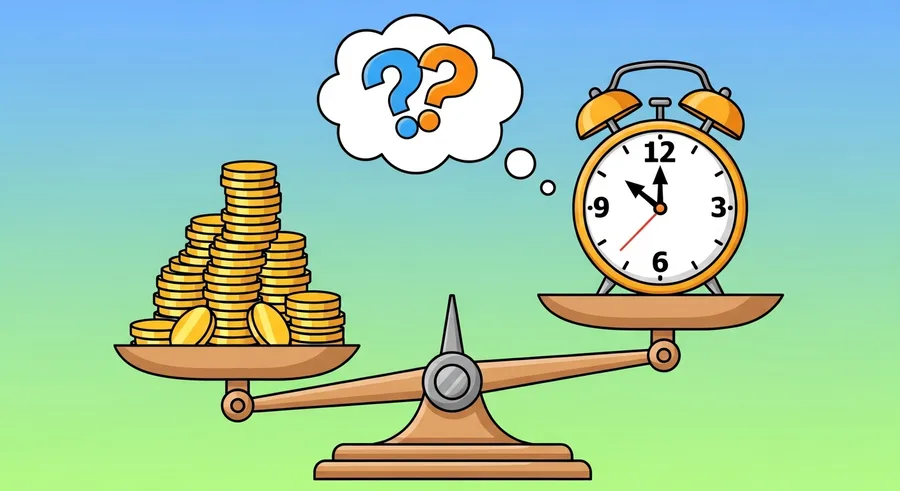
Discipline is not a static quality. It is a resource that you use throughout the day. When you are tired or stressed, your discipline will fail. You must recognize when you are reaching your limit.
Stop trading when you reach a predefined loss limit for the day. This is your ultimate safety net. It prevents you from digging a hole that you cannot get out of. It is a sign of maturity.
Review your trades every day after the market closes. What went well? What could have been better? This is the only way to improve. You cannot learn if you do not look back at your actions.
Keep your trading journal updated daily. It should be a factual record of your activity. Avoid emotional writing. Just record the facts and your observations. This will help you identify your weak spots over time.
Adapting to Market Environments
Not every day is a good day to trade. Sometimes the market is range-bound and low volume. Other times it is high volatility with wide swings. You must adapt your strategy to the current environment.
When volatility is low, your setups might fail more often. You should reduce your size during these times. Do not try to force a profit in a market that does not want to move.
When volatility is high, you must be very careful with your stop losses. They need to be wide enough to give the trade room, but not so wide that they break your account rules. This is a delicate balance.
Always check the economic calendar before you start your day. Are there major news events coming up? If so, be prepared for sudden moves. Sometimes it is better to wait until after the news passes.
Building Better Habits
Consistency comes from habits, not motivation. You need to build a routine that makes good trading automatic. For example, always check your risk before you click the button.
If you find yourself repeatedly making the same mistake, you need a new rule. If you forget to place a stop loss, make a rule that you cannot enter a trade without one. It is that simple.
Do not overcomplicate your strategy. A simple approach that you follow consistently is much better than a complex one that you ignore. Stick to the basics. Keep your charts clean.
Your goal is to become a trader who makes the same correct decisions day after day. It takes time, but it is the only way to build a long and successful career in the markets.

Related guide for Prop Firm Trading Psychology: Stay Clear Under Evaluation Pressure: For the next practical part of your preparation, continue with Why Prop Firm Traders Fail Challenges and How to Build a Better Process. Most challenge failures are preventable process failures. This guide breaks down the patterns that repeatedly end evaluations and the habits that replace them.
Final Assessment
Your mental state is the most important part of your trading business. If you are not in the right mindset, no strategy will work for you. You must take responsibility for your own behavior.
This means accepting that you will lose trades. It is a natural part of the game. The key is how you respond to those losses. Do you learn from them, or do you let them ruin your day?
Keep your focus on the process. Success is not a destination. It is a result of consistent, disciplined action. Stay patient. Keep learning. The market will always be there.
Ultimately, you are your own boss. You must be the one to hold yourself to the standards you set. If you can do that, you will have a much better chance of reaching your long-term goals.
Simulating Market Stress Through Scenarios
Mental preparation works best when you practice reacting to adverse outcomes before they actually occur. You can build resilience by running dry simulations of worst-case scenarios. Identify your specific emotional friction points by walking through a hypothetical loss of 3% of your account in a single day. This hypothetical example forces you to visualize your actual reaction to a sudden drawdown before the market forces the situation upon you.
Consider a hypothetical case where a trader enters a position and the market gaps through their stop loss. This is an edge case that often triggers panic. If you have a written protocol for how to handle slippage, you stay calm. Without one, you might abandon your strategy. Document exactly how you will handle wider than expected losses. This prep work turns a chaotic event into a manageable task.
Practice these scenarios during non-trading hours. Review your chart history to find times when your strategy failed significantly. Re-enact that trade in your mind. Focus on the moment the trade went bad. Instead of just noting the loss, describe the physical sensation in your body. Notice your breathing and your impulse to click buttons. Awareness of these cues provides an early warning system during live trading.
Simulate stressful market scenarios
Use these exercises to build a mental script. When you experience a similar loss in real life, you can follow the script instead of reacting to the discomfort. This approach shifts your focus from the emotional shock of the loss to the objective execution of a backup plan. It turns a surprise into a planned deviation. Practice makes this shift almost automatic.
Review these scenarios weekly. Your emotional triggers might change as you gain experience. An edge case that bothered you last month might be boring today. Keeping your simulations current ensures that your mental preparation matches your current skill level. This keeps your response sharp and avoids the trap of complacency during easier market conditions.
Refining Logic Through Data Critiques
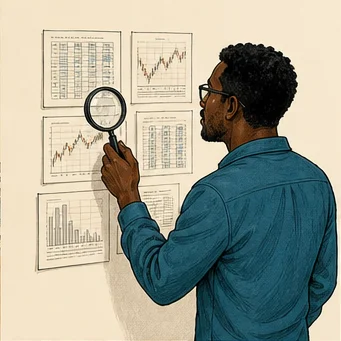
Objective analysis requires looking at your trading data as if it belonged to a total stranger. When you look at your own log, you often make excuses for bad habits. You tell yourself the market was just erratic. If you detach yourself from the outcome, you can see the truth. You must treat your trade data as raw evidence of your own decision quality rather than just profit results.
Consider a hypothetical example of a trader who maintains a 60% win rate but loses money overall. By looking at their data, they realize their winning trades average $50 while their losing trades average $150. This simple math reveals a major flaws in their risk management. Their high win rate keeps them feeling good, but the underlying structure is broken. The data exposes the flaw that their ego ignores.
Critique data for improvement
Identify recurring patterns in your mistakes. Check your journal to see if you tend to fail during specific times of the day. Perhaps you always lose money in the final hour of the session. This is a common pattern that often points to fatigue rather than a bad strategy. Once you spot this, you can set a rule to stop trading at 3 PM. The data dictates the change, not your feelings.
Create a simple spreadsheet to track your rule compliance. Every trade gets a score. A 1 means you followed all rules perfectly. A 0 means you broke a rule, even if the trade made money. When you focus on the score rather than the P&L, you build better long-term habits. You want to see that number 1 as often as possible. This builds a feedback loop centered on professional conduct.
Share your anonymized data with a mentor or peer who is not involved in your trading. They can see things that you miss because they are not emotionally invested in your account. They will not be swayed by your justifications for a bad trade. They will focus purely on the patterns in your numbers. This external view is a powerful tool for self-correction and growth.
Managing Operational Constraints
Trading requires more than just a good setup. You also need a reliable environment. Technical failures are a major source of stress that can ruin your performance. If your internet flickers or your platform freezes, you might feel a rush of anxiety. You need a contingency plan that handles these technical gaps before they happen. Operational readiness is part of your psychological protection.
Consider a hypothetical situation where a trader loses power during an open trade. They have no way to close the position. If they have a pre-set automated stop loss already resting on the exchange server, they stay calm even if the power is out. Without that server-side stop, the trader might panic and try to access the platform using a mobile device in a rush. This rush causes mistakes.
Always ensure your stop loss is sent to the server. Never rely on your local computer to trigger your exit. If your software crashes, the server-side order still protects your capital. This is a basic rule of safety. It allows you to step away from your computer without worrying about a sudden catastrophe. It provides peace of mind that translates to better focus while you are at the desk.
Manage operational constraints
Develop a list of backup equipment. Keep a charged laptop and a mobile hotspot ready to go. If your main internet goes down, you have a clear path to fix the situation. You do not spend your energy being angry at your provider. You spend it on your next trade. This removes the stress of uncontrollable external variables from your daily workflow.
Test your backup procedures once a month. Make sure your secondary connection works and your emergency exit orders trigger correctly. This small bit of extra work prevents a minor technical nuisance from becoming a significant financial loss. It is a sign of a professional trader to respect the environment as much as the strategy. Keep the focus on the task of executing your plan.
Limiting Decisions to Save Focus
You have a limited supply of mental focus every single day. Every choice you make consumes a bit of that supply. Selecting a trade, adjusting a stop, checking a news feed, or choosing a snack all draw from the same well. If you waste your decision energy on trivial things, you will have less left for your actual trading. You must automate as much as possible.
Consider a hypothetical trader who tries to trade 4 different assets at once. They have to decide which one is the best setup in every minute. By midday, they are exhausted. They start making sloppy errors. Now compare them to a trader who only watches one asset. They have plenty of focus left to watch for their one specific setup. Their decisions remain sharp all day long.
Limit the variables in your workspace. Do not keep unnecessary tabs or applications open. If you do not need a window to execute your strategy, close it. Every extra bit of information on your screen is another thing your brain has to process. Remove the visual clutter. Your brain will thank you by maintaining a higher level of focus for longer periods.
Limit decisions to save focus
Pre-decide your risk settings for every trade. Do not calculate how much to risk while the market is moving. That is a waste of precious cognitive power. Have a fixed percentage or dollar amount for your risk per trade. When a setup appears, your choice is already made. You just execute. This reduces your mental load significantly and helps prevent you from overthinking.
Create a simple pre-session checklist. This checklist keeps you focused on the right actions without having to think about them. It reminds you to check your risk, your news calendar, and your planned stop loss. When you follow a routine, you preserve your mental energy for the only thing that matters: the quality of your entries and exits. This is how you sustain high performance over time.
Final Takeaway
Create a reset that is mechanical: close the platform, record the loss and rule status, take a timed break, then decide whether the next planned setup is still eligible. This makes the pause available before emotion writes the next trade.
Measure success by clean execution and preserved risk capacity as well as profit. That definition remains useful after a pass, when fear of losing access can produce the same distorted decisions.