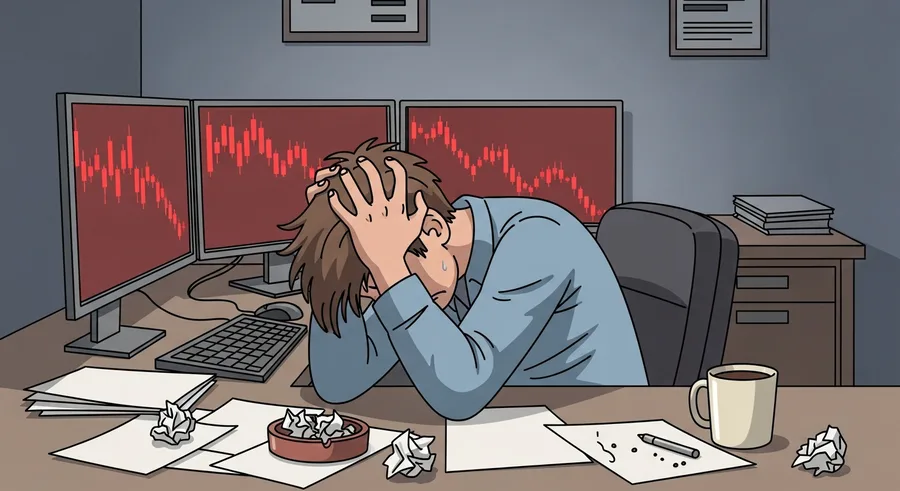
A losing trade is simple data. It is not an instruction to speed up or force a reversal. When you lose money in a prop firm evaluation, the safest step is to stop and look at your account metrics. You need to verify exactly what changed in your standing. You must decide if your last trade followed your documented plan. This process defines the difference between a minor setback and a failed evaluation.
True recovery starts with basic math and clear observation. If you rush to restore your starting balance before checking your daily and total loss rules, you invite disaster. A manageable drawdown can quickly turn into a permanent breach if you do not account for every cent correctly. This guide outlines how to process a loss, keep your risk in check, and determine if you should keep trading today.
Readers building a complete challenge plan can pair this review of how to continue after a loss and still pass a prop firm challenge with the prop firm passing service guide, which compares the wider support process and its limits.
The First Response to a Loss
Close the decision loop immediately before you open another position. You must confirm your final fill prices, realized losses, and floating profit or loss status. Check your commissions and any open orders that might still be sitting on the books. This is a critical moment where traders often make errors. If the execution looked abnormal, take a screenshot of your platform for your own records.
Step away from the screen for at least 15 minutes. This break prevents your next order from being a emotional reaction to the previous one. A valid market setup can always occur later. An unplanned attempt to erase a loss changes your risk model and damages your focus. When you trade out of anger or frustration, you lose the technical edge that defines a professional approach.
Use this checklist to stabilize your environment after a loss occurs:
Cancel all forgotten pending orders immediately.
Check your dashboard equity against the platform history.
Record your exact entry, exit, and reason for the trade.
Take a strictly timed break before looking at charts again.
Recalculate the Account Standing
Update the firm’s daily-loss measurement using its specific reset and equity methods. Do not trust your memory for these numbers. If the firm includes floating loss in its daily calculation, ensure your math matches their platform display. You need to know exactly how much room you have left before you reach a hard limit. Precision is the best defense against a sudden disqualification.
Recompute your position size based on the remaining buffer. If your original $200 risk no longer fits within your personal daily stop, you must reduce it. Alternatively, stop trading entirely for the session. Keeping an old lot size is not a recovery strategy. It is a gamble that your next trade will be perfect. You must adjust your risk to match the current reality of your account balance.
Imagine your account has $500 of room left before a daily limit. If you usually risk $100 per trade, you have 5 chances remaining. If you lose $300 on one trade, your remaining buffer drops to $200. You should now risk no more than $40 per trade. This keeps you in the game longer. Scaling down is a mechanical choice that keeps you compliant and calm.
Classifying the Loss Type
Classify your trade before you change any strategy. A planned trade that hits a stop is normal variance. It happens to every professional. However, a late entry, a moved stop, an event violation, or a simple order error has a different remedy. You need to know which category your loss falls into. Identifying the error prevents you from making the same mistake twice in one day.
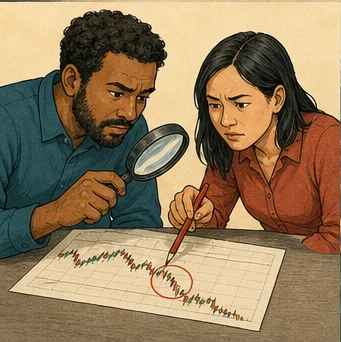
Review your chart and order history without changing the narrative after the fact. It is very easy to lie to yourself about why a trade went wrong. The only useful question is whether your specific rule was present before entry and if you followed it during the trade. If you broke a rule, admit it. If the trade was valid but lost anyway, accept the cost of doing business.
Consider this hypothetical example. You see a clear breakout. You set a stop loss at a level that represents 1% of your capital. The price hits your stop and then continues to your original target. This is not a failure of your strategy. This is an unavoidable cost of trading. You should classify this as a standard loss and avoid trying to widen your stops just to avoid similar outcomes in the future.

Reduce Before You Recover
Lowering your size creates room to observe whether your edge is intact. It is not a punishment. It is a way to limit the damage of being wrong twice in a row. If you feel pressured to win back your losses, you are likely over-leveraged. By cutting your position size in half, you double your capacity for patience and reduce the negative impact of small technical errors.
Reduce your decision count as well as your cash risk. Trade only the most defined setup. Avoid adding instruments or markets simply because your primary market is quiet. Many traders force trades when their favorite market is not moving. This leads to poor entries and unnecessary loss. When you are behind, your priority is to protect what remains, not to generate high volume.
Suppose you typically trade 4 contracts on a index future. After a losing trade, you find your nerves are rattled. Lowering your size to 2 contracts allows you to stay active in the market without the heavy financial weight. You can see your ideas play out with less volatility in your equity curve. If you succeed with 2 contracts, you can gradually return to your normal size in later sessions.
When a No-Trade Day Is Correct
Stand aside when your personal daily stop is reached. You should also stop if your remaining buffer forces impractically small risk. If your technology feels unreliable, or if you cannot describe your next setup calmly, stop for the day. A no-trade day is a sign of a strong trader. It shows you value the integrity of the account over the urge to trade for the sake of activity.
A no-trade day should be documented as an intentional control. Do not treat it as a lost opportunity. Review your rules during this time. Wait for your next planned session rather than watching price and looking for a way back into the market. Every minute you spend away from the charts after a loss is time spent preparing for the next success.
Many traders struggle with the idea that sitting out is an active strategy. However, preventing further losses is exactly how you pass a firm challenge. You cannot pass if your account balance hits zero. By choosing not to trade on a day where the market is messy or your focus is low, you preserve the opportunity to trade on a better day. This is a deliberate, winning decision.
How Support Can Help
Useful support staff can help you check your own calculations. They can clarify the rules about your journal or help you enforce a pause that you might otherwise ignore. They should never sell you a recovery promise. If a support representative suggests that you should take high-risk trades to recover lost capital, be cautious. That is not professional advice.
Confirm that your interactions with support are allowed by the firm. Always preserve your control over your own account credentials and your trading decisions. Ask for written reasoning if there is ever a dispute about a rule. Keep a record of any guidance provided to you. Do not let anyone else make a trade on your account, even if they claim it will help you succeed.
Be wary of any support service that promises to unlock a secret to passing an evaluation. There are no secret indicators that guarantee success. If someone tells you that you can bypass a rule or that a certain trade is a guaranteed win, walk away. Use support for technical help and rule clarification only. Your trading success must come from your own analysis of the markets and your strict adherence to the firm rules.

Related guide for How to Continue After a Loss and Still Pass a Prop Firm Challenge: A useful companion for this decision is Failed a Prop Firm Challenge? A Complete Recovery and Reset Plan. A failed evaluation does not automatically mean your strategy is broken. Use this evidence-based reset plan to identify the real failure point before attempting another challenge.
Continue or Stop the Attempt
Continue your evaluation only if the account still has a workable buffer. Your plan must retain its edge, and your next risk unit must fit comfortably within the firm limits. Stopping can be the most rational choice when the remaining path to a goal would require larger risk than you are comfortable with. Do not force an impossible goal. Protect your capital and start fresh if necessary.
Set your threshold before the emotional moment arrives. Decide in advance what your personal maximum drawdown is. If you reach a certain number of process errors in one day, set a rule to stop. This is a decision rule, not a prediction of how the market will act. It protects you from the temptation to keep going when your judgment is compromised.
Think of this as a business limit. If you were running a shop, you would not keep the doors open if you were losing money at a rate you could not sustain. You would close for the day, rethink your pricing, and open again when you had a better plan. Trading is no different. Knowing when to stop is a competitive advantage that separates winners from losers in the long run.
Carry the Lesson Forward
Convert every review into one concrete control. This might be a calendar alert to check news, a smaller opening size, or a stricter no-trade condition. Broad promises to be disciplined are difficult to execute. You need a specific action. If you entered a trade too early, your new control might be to wait for a 5-minute candle close before confirming the trade setup. Make your rules practical.
Carry the control into your simulation account first. If you want to change your risk management, test it in a safe environment. A loss can be valuable only if the next attempt has a measurable difference in your process. Focus on changing the way you approach the trade, not just the outcome. Success follows when your process becomes ironclad and your errors become smaller over time.
Keep your notebook updated with these changes. Whenever you identify a mistake, write down the rule you will use to avoid it. Review these rules every morning before the market opens. As you repeat this cycle, you will find that your trading becomes more consistent. You will stop making the same mistakes. This is how you slowly build a foundation that can withstand even the toughest market conditions.
Building Long-Term Resilience
Resilience in trading comes from accepting that losses are part of the game. If you expect a perfect, upward line on your equity chart, you will be disappointed. Every successful trader has had periods of drawdown. The difference is how they handle the aftermath of those losses. They do not change their personality or their strategy in response to a bad day. They stay the course and follow the process.
Spend time observing how you behave when you are behind. Do you get jittery? Do you look for trades that aren't there? Do you try to change your system mid-stream? If you notice these patterns, take steps to change them. Work on your self-control as much as your technical analysis. A steady mind is your most valuable tool when you are facing a losing streak in a challenge.
Focus on the long game. You are not trying to win the challenge in one day. You are trying to survive until you reach your profit goal. Every single trade should be viewed as one step in a very long journey. If you lose one step, you do not abandon the path. You learn from the mistake, adjust your footing, and keep moving forward with the same commitment you had at the very beginning.

Managing the Mental Game
Your mental state determines your ability to execute your plan. If you are angry or anxious, you will likely deviate from your rules. The best way to manage this is through simple routine. Have a clear, written plan for what you will do if you lose a trade. Knowing exactly what happens next removes the fear of the unknown. When you have a plan, you have control.
Try to maintain a neutral perspective on your account balance. The number in your account is just a number. It is not a reflection of your worth as a person. If you can detach your identity from the performance of the account, you will make better decisions. Trade because you love the challenge of the market, not because you are trying to impress anyone else or prove a point.
Practice deep breathing or other simple grounding techniques when you feel your emotions rising. Taking a few seconds to breathe can clear your head. It helps you return to a state where you can focus on the technical details of the chart. Keep your environment simple and quiet. A clear mind is essential for making the hard choices that often come with trading a prop firm evaluation.
Strict Adherence to Firm Rules
Compliance is not optional. Every prop firm has rules designed to protect the capital. If you violate these rules, you fail. It does not matter if your trade was a good idea in theory. If you hit a limit or trade during a prohibited time, the result is the same. Study the rulebook like a manual for a complex machine. You need to know the limits better than the firm does.
Pay special attention to drawdown rules. Understand the difference between a static and a trailing drawdown. Some firms use the highest balance to track your limit, while others use the end-of-day balance. Know which one applies to you. If you are unsure, ask for clarification. Do not guess. A guess can cost you your entire evaluation, even if you are a skilled trader.
Monitor your compliance in real-time. Do not wait for an alert from the firm to tell you that you are near a limit. Keep your own spreadsheet or use a secondary monitor to track your risk. If you see yourself getting close to a limit, be proactive. Take a step back. Reduce your risk voluntarily. It is always better to be cautious and alive than to be aggressive and out of the game.
Optimizing Your Strategy
Once you have a process for handling losses, look at your strategy itself. Is it too aggressive? Does it lead to frequent, large drawdowns? You might need to optimize your parameters to fit the constraints of a prop firm. This does not mean abandoning your style. It means tailoring it to ensure you have enough longevity to reach the finish line. Small adjustments often yield the best results.
Backtest your strategy using historical data. See how it would have performed during different market conditions. Would it have survived the volatility of a major news event? If the answer is no, you need to adjust your rules. Use the data you have from your live trading to refine your approach. The best strategies are the ones that are tested and proven over time.
Remember that you are looking for a sustainable path. You do not need the highest profit in the shortest amount of time. You need the most consistent performance that stays within the rules. If you find yourself constantly dancing on the edge of a limit, you are taking too much risk. Smooth out your equity curve by reducing your position sizes and waiting for the highest-probability setups only.
Related guide for How to Continue After a Loss and Still Pass a Prop Firm Challenge: For the next practical part of your preparation, continue with Prop Firm Trading Psychology: Stay Clear Under Evaluation Pressure. Challenge rules turn normal trading variance into a psychological test. These routines help you protect attention, avoid revenge trading, and make the next decision objectively.
Looking Toward the Future
Success is not about avoiding losses. It is about how you manage them. By following these steps, you build a foundation that can survive any temporary setback. You learn to stay calm, calculate your risk, and keep your focus on the process. This is the hallmark of a professional. Keep this up, and you will find yourself in a much stronger position to pass your evaluation.
Keep refining your routine. Every time you trade, you learn something new about yourself and the market. Use that knowledge to make the next session even better. Do not be afraid to admit when you are wrong. A wrong decision today is just a lesson for tomorrow. As long as you stay within your limits, you have all the time you need to reach your goal.
Stay dedicated to your own personal growth. The skills you learn while navigating a difficult drawdown will serve you for your entire trading career. You are not just trying to pass a challenge; you are building the mindset of a successful trader. Take pride in your discipline and your commitment to doing things the right way. That is the true path to long-term success in the markets.
Leveraging Historical Trade Data
A rigorous approach to loss recovery starts with a deep dive into your own history. You must maintain a clean record of every trade entry, stop placement, and exit reason. When you face a losing streak, compare these trades against your original rules. Many traders fail to see that their losses share common traits. This might be a specific time of day, a particular asset class, or a recurring tendency to ignore trend signals. By identifying these patterns, you stop viewing losses as random events and start seeing them as data points that highlight your unique weaknesses.
Use a spreadsheet to track your equity curve relative to your draw-down limits. Hypothetical example: If you start with $10,000 and your limit is $500, map your equity daily. If your account drops to $9,700, calculate the percentage of your total buffer remaining. Tracking this visually prevents the surprise of a breach. You will see the slope of your equity decline long before it hits a critical level. This visibility allows for early intervention instead of blind hope.
Leverage historical trade logs
Segment your trades into categories based on market volatility. Some strategies perform well during low-volume sessions while failing during news events. If you see that your losses consistently occur when volatility spikes, you must document this as an edge case. Create a rule that mandates a 30-minute pause around major economic releases. This simple binary filter can save a significant portion of your capital over the course of a long evaluation.
Refine your journal by noting the difference between a planned trade and an impulsive reaction. Tag each entry in your log as either systematic or emotional. If the count of emotional entries is rising, you have objective evidence that your psychological state is hindering your results. Do not ignore these entries during your weekly review. They are the primary source of unnecessary depletion in your account balance.
Apply quantitative filters to your future trade setups based on past failures. For instance, if you lost $200 on three different trades because you entered too early, implement a 5-minute confirmation delay in your setup list. Every rule you add should be a direct response to a proven, repeated error. This converts the pain of a loss into a structured improvement of your mechanical process.
Use data driven frameworks
The goal is to move from reactive decision-making to a predictive framework. By using your past trades as a template, you can simulate how your current strategy would hold up under extreme market pressure. If the simulation shows a high risk of hitting a drawdown limit, adjust your size before you place another trade. Proactive adjustments based on historical logs are far superior to guessing when the market feels right.
Scaling Risk Mechanics Under Pressure
Dynamic risk management is vital when your account balance shifts toward your drawdown threshold. Many traders keep a static risk unit regardless of their account performance. This is a primary reason for failing evaluations. When you lose, you have less capital available to trade. Consequently, you must reduce your position size to maintain the same percentage risk. Failing to scale down is essentially increasing your leverage as your safety net shrinks.
Define your risk in units of equity rather than currency. Hypothetical example: If your account limit is $500, define your maximum loss per trade as 2% of the available remaining buffer. If your buffer is $500, your risk is $10. If your buffer drops to $200, your risk must drop to $4. This automatic scaling ensures that you never breach your limits during a sequence of small losses.
Develop a tiered system for position sizing based on your confidence and remaining headroom. Use 100% of your calculated size during high-confidence, high-probability setups. Use 50% for average setups. If your account has dropped below a specific safety margin, remove the high-confidence tier entirely. This mechanical restriction keeps you in the market during difficult periods without risking a total account wipeout.
Validate your scaling system
Test your scaling system in a demo environment before applying it to your active evaluation. Ensure that your platform can handle the adjustments in lot or contract sizes without requiring manual overrides. Automation can help, but manual discipline remains the final layer of protection. Practice calculating these numbers quickly. If you cannot do this math in under 30 seconds while the market moves, you are not ready to trade.
Consider the role of commissions and fees in your risk scaling. These costs add up when you trade frequently or use large position sizes. If your account balance is near a critical level, even small commission costs can trigger a breach. Always include a buffer for these costs when calculating your trade size. Treating commissions as a fixed expense helps you avoid the trap of underestimating the cost of your position.
Accept that smaller position sizes mean smaller profits. This is the price of keeping your account alive during a recovery. You must prioritize the survival of the account over the speed of your recovery. If you feel impatient because of your smaller gains, remind yourself that you are in an evaluation, not a race. Consistent progress with small risk is the most reliable way to reach your ultimate profit target.

Managing Environmental Factors
Your trading environment directly influences your ability to follow a plan. Distractions like social media, news feeds, or noisy surroundings can disrupt your focus during critical market periods. When you are already dealing with a loss, these stressors can push you toward reckless decisions. Create a dedicated space that is clean, quiet, and optimized for data observation. Remove all tools that are not necessary for your specific strategy.
Set strict time limits for your active market observation. The longer you watch the screen, the more likely you are to engage in over-trading. Hypothetical example: If your typical trading block is 4 hours, set an alarm for 2 hours if you experience a significant loss in the first half of your session. This forced break allows your brain to reset and helps you detach from the immediate stress of the drawdown.
Filter the noise of the market to match your strategy. If you are a technical trader, hide the news tickers that can trigger emotional reactions. If you are a fundamental trader, do not obsess over minute-by-minute price fluctuations on lower time frames. Focus only on the data points that confirm or deny your setup. Less information often leads to higher quality, more consistent decisions.
Prepare for potential technical failures
Prepare for technical failures as part of your environmental setup. Ensure you have a reliable backup plan for your internet connection and platform access. If your internet drops during a trade, do you know how to contact the broker to close your position? Having these procedures written down reduces panic. When you know you have control over your technical environment, you are less likely to make irrational moves during a market glitch.
Implement a daily preparation routine before the market opens. Write down your intended risk, your target setups, and your exit criteria for the day. Having these items in front of you creates a boundary for your behavior. If a market situation does not fit these criteria, your environment should signal that no trade is possible. This preparation acts as a guardrail against impulsive behavior when emotions run high.
Evaluate your fatigue level as part of your environment. Trading requires intense concentration. If you feel tired or stressed, your ability to make objective decisions drops significantly. If you cannot maintain your focus, stop trading. Acknowledge that your performance is tied to your physical and mental state. Protecting your energy is just as important as protecting your capital in a competitive market.
Conducting a Thorough Post-Session Audit
An audit serves as the bridge between your recent performance and your future results. Schedule at least one hour after the market closes to review every action you took during the session. Compare your actual trades against your documented trading plan. Were your entries consistent with your rules? Did you move your stops or adjust your targets after the trade began? Document every deviation clearly, regardless of whether the trade was a win or a loss.
Analyze the quality of your decisions in the context of the market conditions. Use a scale of 1 to 5 to rate each trade based on how well it adhered to your system. A 5 is a perfect execution, while a 1 is a complete violation of your rules. Hypothetical example: If you had 5 trades with scores of 1, 2, 2, 4, and 3, your average score is 2.4. This shows you have room to improve your consistency. Focus on why you scored 1 or 2, and identify the trigger for those weak entries.
Document emotional states and compliance
Document the specific emotional state you were in during each trade. Use a simple word or phrase to describe how you felt. Words like anxious, bored, or frustrated are common indicators of a mindset that does not belong in the market. If you see a trend of emotional trading, change your rules to force more time between your trades. You need to identify the link between your feelings and your rule violations.
Check your compliance status one last time for the session. Did you stay within your daily and total drawdown limits? Did you trade during banned times? Ensure that your platform data matches your manual journal. If there is a discrepancy, resolve it immediately. Small inaccuracies can accumulate and lead to unexpected disqualification later in the evaluation. Precision in your records is the hallmark of a serious trader.
Plan adjustments based on audit
Plan your next session based on the results of your audit. What will you do differently tomorrow? If your biggest issue was over-trading, make a rule to limit your maximum trades to 3 per session. If your issue was late entries, write a rule that mandates waiting for a retest of a key level. Make these changes small, actionable, and specific. You are building a system that is resilient against your own habits.
Review your progress toward your overall goal in the context of the audit. If your account is trending downward, ask yourself if your current strategy is truly suited for this challenge. Be honest about your performance. If your strategy is not producing the expected results, consider a period of simulation until you can demonstrate consistent growth again. This is not a step backward; it is a vital step toward long-term success.
Final Takeaway
The objective after a loss is not to make the P&L look better today. It is to protect your remaining opportunity and determine whether your process still deserves your risk. If you cannot describe your next setup with total calm, you have no business opening a new position.
A calm calculation, a smaller next decision, and an honest journal review are far more useful than any recovery slogan. Protect your account from your own reactions. When you learn to walk away from a losing day without trying to force a win, you have already conquered the hardest part of the trading challenge.