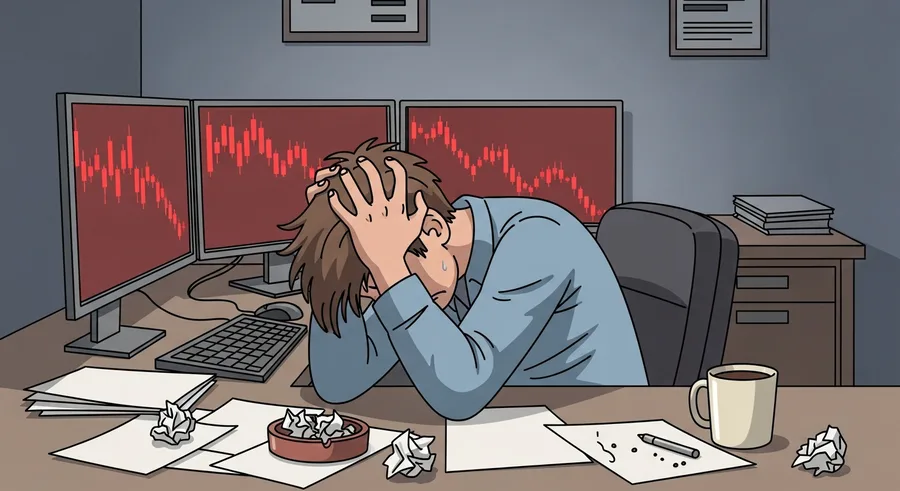

A failed challenge is data, but only if you preserve it before buying another account. Export the trade history, screenshot the dashboard, and write down the rule status while the sequence is still clear [L4].
The aim of a reset is not to recover the fee emotionally. It is to identify one or two controllable failure mechanisms and test a smaller process that can survive ordinary losing trades [L5].
This guide helps you pivot from frustration toward a systematic review process. Treating your next attempt as an engineering problem rather than a gamble increases the utility of your capital. By deconstructing the steps that led to your breach, you build a foundation for long-term consistency that survives the volatility inherent in market participation.
For the broader service-selection and evaluation framework, use the prop firm passing service guide alongside this focused review of failed a prop firm challenge? a complete recovery and reset plan.
Why You Should Pause Before Buying Again
A same-day reset often carries the same size, instruments, and urgency that caused the first breach. Set a cooling-off period and do not fund a new attempt until your audit has a specific conclusion [L11].
Use the pause to separate a genuine setup loss from an operational mistake. If the answer is simply that the market was difficult, the audit has not yet produced a change worth paying to test [L12].
Taking three to five days off is essential for cooling your decision-making centers. Many traders rush back into the market because they feel a need to prove themselves. This psychological pressure creates a blind spot where you stop seeing the market clearly. Instead, you start seeing the screen only as a way to fix your account balance. That mindset rarely survives the first volatility spike of a new attempt.
Your first goal after a loss is to stop the bleed of mental energy. By waiting, you allow your nervous system to regulate itself. You stop chasing trades that fit the rules on paper but lack the underlying logic of a real opportunity. Treat the pause as a non-negotiable part of your trading business plan. If you cannot stop, you have not yet gained control over the process.
Run a Failure Audit
Classify each trade as planned, unplanned, rule-breaking, or technically allowed but poor process. A losing planned trade is different from moving a stop; mixing them makes the remedy vague [L25].
Calculate the sequence in chronological order, including open exposure and commissions. This often shows that the breach began before the final dramatic trade, with several smaller departures from the plan [L26].
Looking at the ledger is not enough. You must look at the logs of your mental state during each trade execution. Were you checking the clock? Were you watching a news feed? These outside influences often lead to trades that look like mistakes in retrospect but felt necessary at the moment. Group your errors into categories like over-leveraging, FOMO, or lack of conviction.
Identify the exact sequence of events that pushed you into the danger zone. Did one trade start the slide? Did a series of losses make you feel the need to win it back? Mapping this emotional trajectory prevents you from repeating the same fatal pattern on your next attempt. Documentation is your primary weapon against repetition.
- Timestamp and instrument [L18]
- Planned versus actual risk [L19]
- Rule affected [L20]
- Trigger for the decision [L21]
The Risk Mistakes That End Challenges
Measure exposure across correlated positions rather than counting tickets. Two currency trades with the same dollar driver can behave like one oversized position, while floating loss can consume a limit before a stop is reached [L33].
Position size should be based on the distance to a logical invalidation level, not on a desired profit amount. Reducing size is often the only valid adjustment when that stop is wider than usual [L34].
Many traders think they are diversifying by trading four different pairs, but they are actually just amplifying their total market risk. If all your assets react to the same economic report, you are effectively trading one position four times. This leads to massive drawdowns that wipe out weeks of work in minutes. Stop viewing your risk in terms of individual trades and start viewing it in terms of total account drawdown.
A common hypothetical failure case is the trader who keeps adding to a loser because the stop is still technically intact. As the market moves against them, they hope for a reversal that never happens. By the time they hit their hard stop, the loss is significantly larger than their initial target. Managing the total risk is always superior to defending individual positions at all costs.

Review the Strategy Without Blaming the Market
Use a meaningful sample with spreads and commissions included. Define the setup, invalidation, and no-trade conditions; if those cannot be stated before entry, the result cannot be diagnosed afterward [L41].
Compare results by instrument and market condition rather than averaging everything together. A setup that works in liquid morning hours may be unsuitable during rollover or a major scheduled announcement [L42].
Stop blaming the market for your losses. The market only does what it does. You are the one who chooses to engage with it under certain conditions. If your strategy failed during a high-volatility event, it means your strategy was not designed for that event. You need to either stay out of the market during those times or create a new strategy specifically for those conditions.
Review your past trades with a cold eye. Did you have a defined exit plan for every entry? If you are honest, you will see that many entries lacked a specific reason for being there. They were hopeful guesses rather than systematic applications of a tested rule. Remove the hope from your trading and replace it with repeatable, observable mechanics that work regardless of sentiment.
Build a Smaller, More Repeatable Plan
Translate the loss allowance into units of risk. For example, if a daily buffer is $500 and one planned trade risks $100, five full losses exhaust it before costs; choosing two or three attempts leaves room for execution error [L49].
Write the plan in observable terms, such as one setup type during a defined session and no more than three entries. That makes it possible to tell whether discipline improved before judging profitability [L50].
Simplicity is the hallmark of a survivor. You do not need twenty indicators or three different chart timeframes to identify a trade. You need one clear signal and a consistent way to manage it. When your plan is simple, you can see exactly where things go wrong. If your plan is too complex, you will always find a way to justify your mistakes.
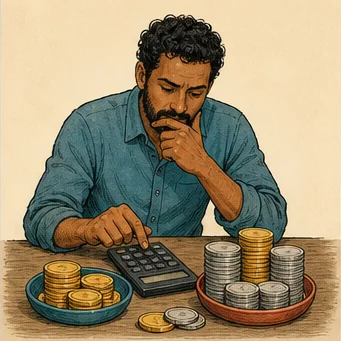
Take the total amount you are allowed to lose before hitting a breach and divide it into bite-sized segments. If you have a total limit of $2,000, treat it as a budget for your education. If you lose $200 on a trade, you have effectively paid for a lesson. When you view money as a resource for learning rather than a score, your stress levels drop significantly.
Related guide for Failed a Prop Firm Challenge? A Complete Recovery and Reset Plan: A useful companion for this decision is How to Continue After a Loss and Still Pass a Prop Firm Challenge. Losses are part of trading. The key is responding without turning one normal result into a rule breach or a revenge-trading sequence.
When Passing Support Is Worth Considering
Support is most useful when it adds a checklist, independent review, or accountability to a plan you understand. It is not a substitute for confirming whether the firm permits the service model or for accepting market risk [L57].
Before paying, decide which specific failure the support is meant to address: sizing, rule interpretation, journaling, or execution discipline. An offer that cannot name the problem is unlikely to solve it [L58].
External help can provide a fresh perspective that you simply cannot get on your own. When you look at your own charts for hours, you stop seeing the errors. Someone else looking at your journal will instantly spot the patterns you are ignoring. Just be careful that you are getting advice on your process, not just a promise to pass the challenge.
Choose mentors or tools that focus on the basics. If they try to sell you a secret indicator or a magical black box, run the other way. Real support teaches you how to read the market yourself. It helps you build a process that you can trust when the market turns sour. The goal is to make yourself independent, not to rely on someone else.
Preparing for the Second Attempt
Start the next account with a pre-trade sheet and a deliberately quiet first week. Verify platform time, loss reset, position-size calculation, and event schedule before treating any setup as tradable [L65].
Treat the first few trades as a systems check rather than a test of confidence. Confirm that stop orders, alerts, and displayed loss figures behave as expected with small or simulated exposure [L66].
Your first week is not about winning. It is about proving to yourself that your system works in the real world. Keep your size small. If your system is meant to earn $500, aim for $50 in the first few days. This lower threshold reduces your adrenaline and keeps you focused on execution rather than results.
Watch your reaction to the platform. Do you feel jittery when you place an order? Do you hover over the close button? These are signs that you are still carrying too much pressure. Adjust your size again until you feel calm. A calm trader is a steady trader who can follow a plan, whereas an excited trader is a liability to their own capital.
Think Beyond the Pass
Build the funded-stage routine now: smaller initial size, payout-condition review, and a process for stopping after an error. A plan that only works while chasing a target is not yet a durable trading process [L73].
A funded account still faces losing streaks, changing volatility, and administrative review. The long-term objective is a process that can reduce activity when conditions deteriorate, rather than forcing monthly performance [L74].
If your plan is only designed to pass a challenge, it will fail once you are actually funded. The rules for a funded account are often different and stricter. You need a process that remains stable even when the rules change. Start practicing as if you are already managing real capital that you cannot afford to lose, because, in truth, that is exactly what you are doing.
Sustainable success is boring. It involves doing the same things every day, regardless of whether you are up or down. If you can stay consistent for three months, you have a better chance of passing than someone who makes a big score and then blows up. Your goal is to be a boring, consistent performer who rarely takes a massive loss.

Managing the Growth of Your Trading
Many traders reach for more size as soon as they see a small profit. This is a common trap. Your primary duty is to keep your account alive. Once you show consistent, low-risk progress over several weeks, you can slowly scale up your position size. Never increase size because you feel like it. Increase it only because your data says you have the edge to support it.
Track your progress in percentages rather than dollar amounts. A 1% gain is a 1% gain, regardless of whether it is on a $50,000 account or a $100,000 account. This shift in focus prevents you from falling into the trap of over-leveraging when you think you have more space to play with. Always respect the percentage limits first.
Be ready for periods where the market just does not suit your style. Every strategy has cycles of success and failure. The trick is to identify when your edge is not working and to pull back your activity levels. You do not always need to be in the market to be a professional. Sometimes the best trades are the ones you do not take because the conditions are wrong.
Document every change you make to your plan. If you decide to add a new indicator or shift your trading hours, write down why. If it fails, you need to know what you changed so you can revert to the previous version. This iterative approach to trading is what separates long-term survivors from those who churn through accounts.
Maintaining Your Mental Focus
Trading is a game of probability played against your own impulses. You are the only person who can stop yourself from breaking the rules. Find ways to keep your focus tight. Some traders use noise-canceling headphones, while others use a visual checklist on their desk. Use whatever works to keep you in the zone of your specific plan.
Recognize the signs of burnout. If you find yourself snapping at small losses or feeling numb when you win, you have been at the screen for too long. Take a break. Go for a walk. Get away from the charts. Your mind needs to reset just as much as your account does. A clear mind will always make better decisions than an exhausted one.
Avoid forums or social media during the trading day. Other people's opinions about the market are just noise. They will distract you from your own setup and lead you to second-guess your plan. Focus only on your screen, your rules, and your risk limits. Nothing else matters when you are in the middle of a trade sequence.
Accept that you will lose money sometimes. It is the cost of doing business. As long as the losses are small and within your plan, they are not failures. They are simply the price you pay to play. Keep your emotions flat, your risk low, and your process consistent. That is the only path to the result you want.

Related guide for Failed a Prop Firm Challenge? A Complete Recovery and Reset Plan: For the next practical part of your preparation, continue with Why Prop Firm Traders Fail Challenges and How to Build a Better Process. Most challenge failures are preventable process failures. This guide breaks down the patterns that repeatedly end evaluations and the habits that replace them.
Mapping Hidden Market Correlations
Traders often experience account termination because they underestimate how multiple instruments move in lockstep. You might hold long positions in two different equity indices and a currency pair that all react to the same central bank data. When that news hits, your combined exposure acts as one massive bet rather than three separate trades. This creates a hidden concentration of risk that violates your drawdown rules instantly.
Consider a hypothetical example to illustrate this trap. You decide to risk 0.5% on a gold long, 0.5% on a silver long, and 0.5% on a copper long. Because these three metals typically trend together during dollar weakness, your total exposure is actually 1.5% on a single directional move. If the dollar strengthens unexpectedly, your total account drawdown suffers a 1.5% hit simultaneously across all three assets.
Use a simple correlation matrix to verify your positions before you place them. Most trading software provides this data or allows you to view historic overlap. If two assets have a correlation coefficient higher than 0.7 over the last 30 days, treat them as a single position. Divide your allowed risk for one position between them instead of assigning full risk to each one individually.
Another risk involves instruments that have an inverse relationship. If you go long on the dollar and short on gold, you may feel hedged. However, during periods of extreme market panic, even inverse assets can disconnect or move in unpredictable ways. Relying on these hedges to protect your account during high volatility is a dangerous assumption. Assume that all your active trades could potentially move against you at the same time and size your positions accordingly.
Accounting for Hidden Execution Costs
Your backtesting often assumes that you get filled at your exact price. In the real world, especially during news events or market openings, slippage can push your entry or exit prices far from your intended levels. These few extra ticks might seem small on a single trade. Over a series of 50 trades, they can represent a significant percentage of your profit target.
To account for this, add a buffer to every trade calculation based on your recent performance. If your records show an average slippage of 2 ticks on entry and 2 ticks on exit, subtract 4 ticks from your projected reward before deciding to enter. If the remaining reward does not meet your required ratio, the trade is no longer worth taking. This conservative approach forces you to be more selective.
Consider this hypothetical scenario. You see a setup with a 20 tick profit target and a 10 tick stop. On paper, that is a 2-to-1 reward ratio. However, your platform logs show an average slippage of 3 ticks on entry and 3 ticks on exit. Your effective profit is now only 14 ticks, and your effective risk has increased to 13 ticks. Your ratio has collapsed to roughly 1-to-1, making the trade a poor use of your capital.
You must also account for the cost of commission. Many traders fail because they calculate their risk limit based on price movement alone. They ignore the fact that every round-trip trade consumes a small percentage of their total allowed daily loss. If your daily loss limit is $500, you must subtract your expected daily commissions from that total before you even open your first trade. This leaves you with a true working capital amount that is safer and more realistic.

Optimizing Stop Placement Tactics
A stop order is not just a safety switch. It is a vital piece of information about the market's current volatility. If your stops are consistently getting hit before the market moves in your favor, your stops are likely placed at levels where other traders have their liquidity. Large participants often move prices toward these clusters to fill their own orders before reversing the trend.
Study your last 20 stopped-out trades. Look at the price action immediately after your stop was hit. Did the price turn back in your original direction within 10 minutes? If this happens frequently, you are providing liquidity to larger players by placing your stops at obvious technical levels. Try moving your stops slightly wider or behind areas where institutional orders are less likely to cluster.
Use a hypothetical example to refine this strategy. Suppose you enter a long position at 1,500 and place your stop at 1,495, just below a recent swing low. The market drops to 1,494.50, hits your stop, and immediately rallies to 1,510. By giving the trade an extra 1.50 of room to accommodate market noise, you would have stayed in the position and captured the full move. The trade cost of that extra room must be balanced against your total risk budget.
The goal is not to eliminate stops. The goal is to set stops that respect the natural oscillation of the instrument. Different assets have different volatility profiles. An index, for example, needs a much wider stop than a major currency pair. Adjust your stop distance based on the average true range of the instrument you are trading. This ensures your stops are based on actual market behavior rather than an arbitrary dollar amount.
Stress Testing Your Trading Plan
A trading plan that works in theory rarely survives the first week of live conditions. You must subject your plan to a stress test before relying on it for your next attempt. Think of this as a dry run where you simulate the pressures of the account without the risk of an immediate breach. If the plan breaks during your dry run, you have identified a flaw without losing your capital.
Start by listing all the conditions that could trigger a failure. This includes high-impact news reports, technical platform outages, or extended periods of sideways price action. For each condition, write down your specific action. For example, if a high-impact news event is scheduled, your plan should state that you close all open positions 5 minutes before the release. If you find yourself unable to follow this rule during the dry run, the plan is not robust enough.
Take a hypothetical set of market data from last month that included a high-volatility event. Apply your proposed strategy to this data to see how it performs under stress. If your strategy would have resulted in three consecutive losses, ask yourself if you can emotionally handle that outcome. If the answer is no, you need to adjust your position size or your entry criteria to ensure your process remains calm even during bad streaks.
Finally, review your stress test results alongside your daily schedule. Does your plan require you to be glued to the screen for eight hours a day? That is a recipe for mental exhaustion. A robust plan should be sustainable, allowing you to walk away from the computer when you are not in a trade. If the plan forces you to overwork, it is only a matter of time before an operational error leads to a breach.
Final Takeaway
Failure does not prove that every entry idea is wrong. It does show where the account process did not tolerate variance, ambiguity, or emotion [L80].
Treat the next fee as capital allocated to a tested process, not as a chance to erase the previous result. That framing makes pausing a valid decision [L81].
Commit to a long-term view of your trading business. Every loss is a lesson, and every small win is a building block for your future success. Stay patient and stay focused on the process above all else.