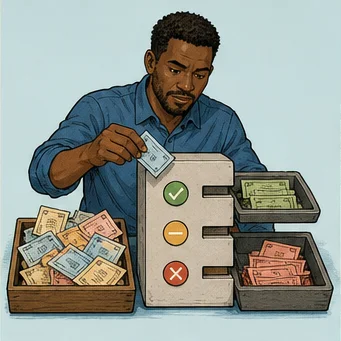

A prop firm account operates under specific conditions that can change without warning. Your dashboard, the legal agreement you signed, and the company website might not always display the same information. Managing these updates is a core part of protecting your capital and maintaining compliance. When a firm shifts its policies, you must determine exactly how those changes affect your active account. This guide helps you navigate these shifts through documentation and careful verification.
Relying on old information or forum hearsay creates avoidable risks. If you do not track rule versions properly, you might trade against constraints that you think are different than they are. This document provides a framework to identify when rules shift, how to archive the changes, and what steps to take before your next trade. You will find that keeping a clear record saves time and removes the guesswork from your decision process when policy updates arrive.
For the broader service-selection and evaluation framework, use the prop firm passing service guide alongside this focused review of prop firm rule changes: how to recheck your challenge terms.
Finding the Official Source of Truth
The first step in managing a rule update is locating the primary source document. You must look at the account dashboard, the original signed agreement, firm rule pages, and official email notices sent to you. A social media post, a random forum thread, or an outdated screenshot might highlight a potential change, but these sources do not govern your legal relationship with the firm. Always prioritize documents that are directly linked to your specific account portal.
When firm documents appear to conflict, do not choose the interpretation that seems most convenient for your current trade. If the dashboard shows one set of drawdown rules while the Terms of Service page says something else, you need clarity. Save both conflicting versions as PDFs and contact support immediately. Ask them specifically which document governs your account stage and purchase date. Do not trade until they confirm the official rules in writing to ensure your account remains safe.
Consider a hypothetical case where a firm updates its daily loss limit. The marketing email says the limit is now 5%, but your dashboard still displays 4%. If you simply assume the higher limit applies, you risk an immediate account violation. You must hold the firm accountable for the discrepancy. Always wait for them to synchronize their systems before you adjust your risk per trade. Acting on unverified information is a common cause for early account termination.
You should also be wary of automated pop-ups that might contain errors. Sometimes, a technical glitch can display a change that does not actually exist in your agreement. Treat every update notification as an alert that requires you to check the backend policy documents. By keeping a copy of the official terms, you ensure that you are not just guessing about the constraints placed on your trading activity. This diligence keeps your account status secure.
Maintaining a Dated Rule Record
Saving a dated copy of your terms is the only way to prove what rules were in effect when you started your account. Before you place your first trade and after you receive any material update, create a secure archive. Include the program name, the specific account stage, the title of the document, and the exact date you accessed it. This folder acts as your personal defense if a dispute arises about your trading history or payout eligibility.
You do not need complex software to track these changes. A simple spreadsheet works well for most traders. List the old rule language alongside the new version, the date of the announcement, and the date the firm says it becomes effective. Keeping a change log helps you notice if a firm gradually tightens its constraints over several months. You can then adjust your long-term strategy accordingly without having to search through your email history for every small update.
Avoid editing or changing the original source files you download. Keep them in their native format, such as a PDF, to preserve their integrity. If you have account identifiers or private correspondence about a specific policy question, store these in a separate secure folder. Do not keep these records on a public forum or an unsecured cloud drive. Your goal is to have a clean, private audit trail that you can rely on if you ever need to explain your trading decisions.
Think of this record-keeping as a part of your business infrastructure. Just as you track your trades to identify patterns, you should track your operating rules. If you find that a firm changes its news trading policy every three months, you will know to expect an update periodically. This prevents you from being caught off guard during a major economic event. Being proactive is much easier than trying to justify a rule breach after the firm flags your account for a violation.
Identifying High Risk Rule Changes
Not all rule updates are equal. You must focus on the parts of the agreement that directly change how your account behaves during a trade. These include the daily loss formula, total or trailing drawdown calculations, reset times, minimum trading days, and news restrictions. A tiny change in how a firm defines a closed position versus a floating position can determine whether your account stays open or hits a drawdown limit. Always read the fine print in these specific areas.
Pay attention to how the firm measures your performance. Some firms use your account balance, while others use the net equity or even the peak of your account profit to set your drawdown limit. If a firm switches from measuring closed results to measuring floating results, your risk management approach must change immediately. You might need to lower your position size to account for the increased volatility this rule causes. Never assume the measurement remains consistent across different account types.
Consider a scenario where the firm changes the reset time for the daily loss limit from midnight UTC to your local market open. This shift alters the entire window when your trades are vulnerable. If you fail to notice this, you might place a trade during what you believe is a safe window, only to find you have triggered a violation. Always map out these time-based constraints on your trading calendar to avoid simple, mechanical mistakes that lead to an account failure.
Additionally, watch for updates to permitted instruments. Some firms may remove specific crypto pairs or volatile commodities from the allowed list without much notice. If you rely on these instruments for your strategy, your trading plan could become obsolete overnight. Always check the instrument list before you start a new evaluation phase. If a favorite asset disappears, verify if there are new alternatives or if you need to pause your trading activity entirely until your strategy is adapted.
Determining When the Change Takes Effect
Firm notices often contain confusing language about whether a rule applies to existing accounts. Never assume a new page automatically replaces your current terms. Look for a clear statement about existing accounts, active evaluations, and funded stages. If the notice is vague, treat the change as potentially retroactive until you get confirmation. You should always err on the side of caution when your account's viability is at stake.
If you are currently in an active trade, you need to know how the rule change affects your open exposure. Some firms allow you to finish your current trades under the old rules, while others require you to adhere to the new standards immediately. If you cannot get a firm answer, the safest path is to close your positions. The potential loss from an account termination due to a misunderstood rule is far greater than the cost of closing a trade early.
Consider a hypothetical case. A firm announces a change to its payout request window. They state it is effective immediately. Does this apply to a request you submitted yesterday? You must check the fine print or ask support. If the new rule adds a requirement that you have not met, your payout could be denied. Always document the firm's clarification in writing. Keep this correspondence in your account folder alongside the new policy document for easy access later.
Being precise with your communication helps resolve these ambiguities. When you contact support, use clear and direct language. Ask specific questions like, Does this rule change apply to accounts that are currently in the funded stage? or Does this rule impact open trades that were placed before the announcement? By getting a specific, written answer, you protect yourself from contradictory interpretations later on. Always save the support agent's response for your records.
Updating Calculations Before You Trade
Your risk management tools, such as trade sizing calculators or spreadsheets, must reflect the latest rules. If you change your approach based on an old calculator, you might inadvertently violate a drawdown limit. After you confirm the new rules, take the time to update your spreadsheets and any automated alerts you use. An outdated tool is often more dangerous than having no tool at all because it gives you a false sense of security.
Before you jump back into the markets after a rule update, perform a no-trade review. Look at your dashboard and see if your calculation of the remaining drawdown matches the firm's calculation. If there is even a small difference, do not increase your position size. Dig into the math until you understand why the discrepancy exists. Sometimes, a firm includes fees or commission costs in the drawdown calculation, which can catch a trader off guard if they only count raw price movement.
Consider a scenario where the firm increases the minimum number of trading days. If you do not update your planning calendar, you might attempt to request a payout too early. This leads to a rejected request and unnecessary frustration. By updating your tracking sheet, you can visualize exactly how many days you have remaining. This proactive step ensures that you remain compliant with every requirement without needing to guess or hope that you have done enough.
Always review your automation settings if you use bots or trade copiers. If a rule change affects how positions are managed, your software might continue to execute trades based on the old, prohibited logic. Check your settings after every significant announcement. If your software cannot be updated to match the new rules, you must stop using it. Prioritize the safety of your account over the convenience of a specific trading tool or automated script.

Related guide for Prop Firm Rule Changes: How to Recheck Your Challenge Terms: A useful companion for this decision is How to Check Prop Firm Rules Before You Start a Challenge. Many failed evaluations begin with a rule the trader did not know existed. Save this checklist and review the firm's own terms before you place the first trade.
Informing Support and Mentors
If you work with a mentor, coach, or an external service that manages your trade executions, you must share the official rule changes with them immediately. Do not assume they have seen the update or understood how it affects your specific account. Use a secure, agreed-upon channel to pass the information along. Then, confirm that they have updated their approach to align with the new requirements. Clear communication here is essential for your account security.
You carry the responsibility for your account, even when others are helping you. If a mentor suggests a trade that violates a newly updated rule, you must be the one to stop it. Do not rely on an intermediary to interpret the firm's intent. If there is an ambiguous term, go back to the firm and ask for clarification yourself. You should keep the official notice and the explanation in your private records, not just in an email thread with your coach.
Imagine a situation where your copy-trading service is unaware of a new rule about news trading windows. They might open a position for you during a forbidden time, leading to an instant violation. You are responsible for this breach, regardless of who pushed the button. By maintaining a strict oversight routine, you ensure that anyone you work with remains within the bounds of your specific program rules. Always double-check their actions against the official documentation.
If you find that your support team is unable to adjust to the new rules quickly, you might need to temporarily revoke their access. It is better to pause your trading than to risk a violation because of a lack of coordination. Your primary goal is to maintain the integrity of your account. By staying in control of the communication and the final decisions, you ensure that your trading business runs smoothly despite any policy shifts from the firm.
Establishing a Repeatable Review Routine
You do not need to monitor the firm's marketing pages every hour of the day. Instead, set a routine that ensures you never miss a material update. Check for notices before you start a new evaluation phase, before you transition to a funding stage, and every time you prepare a payout request. These transition points are the moments when a rule change can have the biggest impact on your success. A disciplined review schedule keeps you informed without causing anxiety.
During an active evaluation, make it a habit to check the dashboard notifications at least once a day. If the firm issues a major policy update, review the official document immediately. Record the date you conducted this check in your trade log. If you find no changes, document that as well. This simple note proves that you are actively managing your compliance. You will feel more confident knowing that you have checked the facts as they are presented.
Consider using a dedicated bookmark folder for your firm's rule pages. When you start your trading day, a quick click lets you scan for any obvious changes. This takes seconds but saves you from potential disasters. Focus specifically on the sections that change how you trade. Ignore the marketing fluff or generic announcements. Your time is valuable, so aim for efficiency by scanning for keywords related to drawdown, time limits, and instrument restrictions.
If you have multiple accounts or work with different firms, create a master calendar for your reviews. List the last time you verified the terms for each account. If a firm does not send an email alert about a change, you will still be protected by your routine. This proactive approach turns compliance from a stressful task into a standard part of your professional routine. Consistency is the key to maintaining long-term account viability.

Knowing When to Pause Activity
Sometimes the best trade is no trade at all. When you cannot identify the current limit, or when an account notice clearly contradicts the rule page, pause your activity. It is far easier to wait a few hours for a support response than to face a violation that ends your evaluation. A pause is not a failure; it is a smart risk management decision. Protect your account by refusing to trade under uncertain or contradictory conditions.
If you encounter a scenario where a provider or tool suggests an action that the terms do not clearly permit, stop. Ask yourself if the risk of a potential violation is worth the potential profit of the trade. The answer is almost always no. Document the specific rule you are questioning and send your inquiry to the firm. Once they clarify, you can decide whether to resume or modify your strategy. Keep this documentation for future reference.
Imagine you are in a situation where the firm announces a new rule but the dashboard still allows you to execute trades that seem to violate it. Do not be tempted to exploit this loophole. Often, the backend systems are updated after the policy, and a trade that seems fine now might be flagged by the firm's compliance software later. When you see a conflict, act as if the strictest version of the rule is the law. This approach ensures your account remains protected.
Resume your trading activity only after the official source, the effective date, and the practical control are clear. When you do resume, write down the reason for the pause and the resolution you reached. This log will be invaluable if you face a similar situation again. By learning from these pauses, you build a stronger, more resilient trading plan. Remember that your goal is long-term sustainability, not just winning the next trade at any cost.
Maintaining Account Integrity
A clear-minded trader views rule changes as an expected part of the industry rather than an obstacle. Firms must adapt their business models, and those changes filter down to you. By keeping your records clean and your communication channels open, you reduce the impact of these adjustments. Your ability to adapt quickly and correctly is what separates a professional from an amateur. Always put your account security at the front of your decisions.
Consider the role of simulated capital in your trading. Many firms use notional funds to assess your skill. Even though this money is not your own, you must still follow the firm's rules as if they were your own capital. The discipline you learn here will pay off if you reach a funded stage where you manage actual money. Treat the rules with respect and you will find that managing your accounts becomes a predictable, manageable process over time.
There is also a difference between firm evaluation fees and support fees. If a rule change leads to a situation where you feel your evaluation is no longer fair, you have the right to ask for an explanation or even seek a refund if the policy shift fundamentally changes what you paid for. However, do this through professional channels. Document everything, be polite, and wait for a formal reply. This is how you handle business disputes effectively.
In the end, your relationship with a prop firm is contractual. The rules form the basis of that contract. If you treat those rules as a living, breathing document that requires your constant attention, you will avoid most common pitfalls. Keep your records, update your tools, and always prioritize clarity. This simple, disciplined approach is the foundation for a sustainable trading career that can withstand even the most frequent policy updates.

Related guide for Prop Firm Rule Changes: How to Recheck Your Challenge Terms: For the next practical part of your preparation, continue with Prop Firm Passing Service Due Diligence Checklist. Ask the operational questions before paying or sharing information: who is involved, what is permitted, how risk is controlled, and how access ends.
Running Through Hypothetical Risk Scenarios
Create a list of worst-case scenarios to test your understanding of new rules before they cause issues. For instance, consider a hypothetical case where a firm introduces a new rule limiting position size during high-impact news. If you trade 3 contracts regularly, model what happens if this rule cuts your capacity to 1 contract. Determine exactly which technical indicators or price levels you would target with this smaller size. Mapping this out in advance prevents panicked decisions during volatile market hours.
Another hypothetical example involves a change to the trailing drawdown calculation. If a firm moves from a daily reset to a real-time trailing limit, calculate the impact on a losing trade. Imagine your account has a $2,000 limit. If you hold a position that dips $1,500 into negative equity before recovering, identify if the new rule would have breached your account. Running these numbers on paper before placing a live trade clarifies whether your current strategy remains viable under the adjusted policy.
Use a blank spreadsheet to simulate your account performance under the new constraints. Create columns for the previous rule set and the new rule set. Track your hypothetical profit and loss across 10 sample trades to see if the new logic triggers a violation early. This audit helps you visualize if the updated rules make your strategy mathematically impossible to execute. If the simulated account hits a breach within your test set, you must pivot your strategy immediately.
Review how these changes affect your psychological approach. A restrictive rule on daily loss often encourages overtrading as a way to make up for missed opportunities. By simulating the impact of the new rule beforehand, you prepare your mind for a slower pace of profit growth. This mental rehearsal helps you maintain discipline when the actual market conditions change, ensuring you do not abandon your edge just because the firm tightened their control parameters.
Finally, store these scenario plans alongside your rule records. If a future dispute arises, you can show the firm that you conducted a thorough review of the new policy. This documentation demonstrates a professional level of diligence that reflects well on your intent. It also provides a ready-made guide for your future self, allowing you to bypass the initial learning curve the next time a similar policy adjustment occurs.
Automating the Monitoring of Updates
Manually checking every website for updates is slow and prone to human error. Use digital tools to monitor for changes to the firm's primary rule pages. Set up a simple page change monitoring service that sends an email alert when the text on a specific URL changes. This ensures you receive notice of policy updates the moment they are published. You no longer need to wonder if a rule changed when you were away from your desk.
Consider using RSS feeds if the firm provides them for their news or update blog. Even if they do not provide a dedicated feed, many browser extensions can convert a standard webpage into a trackable feed. Aggregate these feeds into a single dashboard. This allows you to scan the status of all your accounts in 2 minutes each morning. Efficiency here saves significant energy, leaving you more focused for the actual trading session.
Test your monitoring tool frequently to ensure it still picks up changes. Sometimes, firms update the formatting of a page without changing the rules, which triggers a false alert. Create a test case by checking a page you know will not change, then compare it to the rule page. If your monitor triggers correctly on the live page, you can trust the alert. This confidence allows you to spend less time manually verifying what the automated tool has already confirmed.
Be aware of the limitations of automation. A web monitor will tell you that a rule changed, but it cannot interpret the complexity of the new language. Always treat the automated alert as a prompt to read the document yourself. Once you receive the ping, log into your account, download the new PDF, and perform the manual review described in previous sections. Automation identifies the event, but your critical thinking confirms the impact on your account.
Integrate these automated alerts into your daily checklist. If your software sends an alert, do not ignore it. Mark the task as high priority. By centralizing these notifications, you create a fail-safe system that protects your capital. Never assume that a lack of alerts means the rules are stable, but use the system to confirm your peace of mind. This technical approach makes compliance a seamless part of your daily professional workflow.

Handling Policy Conflicts Through Documentation
Policy disputes often arise because of ambiguous wording in the firm's initial agreement. When you find a clause that seems to contradict a new announcement, look for historical context in your archived files. Check the language in your original contract versus the latest policy update. If the wording changed significantly, identify when the shift happened. This historical data is your strongest asset when presenting a case to support staff during a dispute.
Construct a formal inquiry if you believe a firm is applying a new rule retroactively in an unfair way. Use a neutral tone. Write something like, My account was opened under the terms dated January 1, which stated that news trading is permitted. The updated policy from March 15 suggests this is no longer allowed. Can you confirm if these new terms apply to existing accounts that were started in January? This structure forces the firm to provide a specific, binding answer.
Keep a detailed log of every interaction during a dispute. Include the date of the message, the support ticket number, the agent's name, and their exact response. If you have to escalate the issue, having this log prepared makes the process much faster. Avoid venting or emotional language in your messages. A professional, fact-based approach is always more effective at getting the firm to review your account status or reconsider a penalty.
Prepare for the possibility that the firm will maintain its position despite your evidence. You must decide at what point the cost of the dispute outweighs the value of the account. If the firm refuses to honor the original terms, evaluate your options calmly. Sometimes, it is better to withdraw your remaining funds and move to a different provider rather than fighting a losing battle. Your energy is better spent on trading than on legal wrangling.
Use these difficult moments as data points for your future risk assessment. If a firm shows a pattern of changing rules in a way that hurts your business model, record this behavior in your firm review file. Over time, you will build a private database of which firms are reliable and which ones frequently trigger disputes. This long-term research is an essential part of professional risk management, ensuring you only associate with firms that honor their commitments.
Building a Robust Compliance Infrastructure
A truly professional trader builds a dedicated infrastructure for compliance. Think of this as your business backbone. It consists of your secure file archive, your tracking spreadsheet, your automated monitoring tools, and your log of support interactions. When these systems work together, you remove the guesswork from your daily operations. You can scale your trading across multiple accounts or firms because you have a standardized process for maintaining compliance.
Start by creating a master directory on a secure, encrypted drive. Inside, create folders for each firm you work with. Within these, create subfolders for Contracts, Rule Updates, and Support Logs. Every time you start an account, place the initial terms in the Contracts folder. When a rule changes, add the new document to the Rule Updates folder. This organization ensures that you never lose track of a specific version of your agreement.
Use a simple tracking sheet to link your documents together. Create a summary table where you input the firm name, the account ID, the last review date, and the current rule version number. If you see a version number on the firm's website that is higher than the one in your spreadsheet, you know it is time for an update. This quick index allows you to see the state of all your compliance tasks at a glance.
Invest time in securing your data. Use a password manager for your account logins and encrypt your document folders. Since these records contain your account details and trading history, you should treat them with the same sensitivity as your financial information. A breach of your personal data could lead to account hijacking, which is a risk you must mitigate with strong security habits. Never share these folders with anyone, including mentors.
Treat your compliance infrastructure as a living system. Every quarter, review your folders to archive old, irrelevant information. Update your checklists if you find better ways to monitor for changes. As you gain experience, your process should become leaner and faster. The end goal is to make compliance so natural that it happens in the background, leaving your full attention available for analyzing charts and executing high-quality trades.
Final Takeaway
Treat rule changes as controlled updates to your account plan. Create a reliable system for keeping the official source, dated versions, effective dates, and written clarifications in one secure location. This archive is your best defense against misunderstanding policy shifts or risking your evaluation.
When rules do not clearly answer a material question or if documentation conflicts, always pause your trading activity. Do not assume your interpretation is correct. Seek written clarification from the firm, store the answer with your records, and only resume once you are certain that your planned trades fully comply with the current, governing requirements.